当前位置: 首页> 专利交易> 详情页
    待售中

    SCR的温度控制方法、装置、设备及介质[ZH]

    专利编号: ZL202606054553

    收藏

    拟转化方式: 其他(面议)

    交易价格:面议

    专利类型:发明专利

    法律状态:授权

    技术领域:发动机

    发布日期:2026-06-05

    发布有效期: 2026-06-05 至 2043-08-21

    专利顾问 — 王老师

    电话咨询

    咨询电话

    13760886304

    专利基本信息
    >
    申请号 CN202311055310.9 公开号 CN117090667A
    申请日 2023-08-21 公开日 2023-11-21
    申请人 一汽解放汽车有限公司 专利授权日期 2026-03-17
    发明人 周鹏;肖健;王爽;解昕撙;孟祥开 专利权期限届满日 2043-08-21
    申请人地址 130011 吉林省长春市汽车开发区东风大街2259号 最新法律状态 授权
    技术领域 发动机 分类号 F01N9/00
    技术效果 环保 有效性 有效(授权、部分无效)
    专利代理机构 北京远智汇知识产权代理有限公司 11659 代理人 王倩娣
    专利技术详情
    >
    01

    专利摘要

    本发明实施例公开了一种SCR的温度控制方法、装置、设备及介质。其中,方法包括:确定目标车辆的当前使用场景,并获取与所述当前使用场景匹配的各工况以及各所述工况的数据指标;确定在当前使用场景下所述目标车辆的各载体的温度;根据各所述载体的温度构造代价函数,以确定SCR载体的目标温度;根据所述目标温度对所述SCR载体的实际温度进行调整。本发明实施例的方案,解决了燃油消耗较多的问题,可以实现精准地对SCR的温度进行控制,减少燃油的消耗。
    展开 >
    02

    专利详情

    技术领域

    本发明实施例涉及汽车发动机控制技术领域,尤其涉及一种SCR的温度控制方法、装置、设备及介质。

    背景技术

    随着科技不断地进步与发展,大自然也遭到了不同程度地破坏,温室效应、雾霾、酸雨等自然灾害也不断发生;人类需要选择一种共存的方式,去维持生态平衡,保护赖以生存的家园。有害排放物是大气污染的罪魁祸首,它们来自工厂,来自车辆。为了人们的身体健康,世界各国都对有害排放有着明确规定,这也推动了低排放技术的进步;内燃机从一百多年前诞生,至今为人类提供太多便利,而其有害排放物也是最大的污染来源。

    车辆发动机的排放物主要以碳烟和氮氧化物为主,消除氮氧化物最常见的方式是采用选择性催化转换器(Selective Catalytic Reduction,SCR),其主要原理是氨气和氮氧化物在催化剂的作用下生成无害的氮气和水。催化的条件是满足一定的温度,为了使SCR时刻保持在一定温度以上,通常的做法是留有一定的温度裕度,并且在排温不够时采用主动的提升排温方式,这样做会带来较多燃油消耗。

    如何精准地实现对SCR的温度控制,减少燃油的消耗是业内研究的重点问题。

    发明内容

    本发明实施例提供了一种SCR的温度控制方法、装置、设备及介质,以解决燃油消耗较多的问题,可以实现精准地对SCR的温度进行控制,减少燃油的消耗。

    根据本发明实施例的一方面,提供了一种SCR的温度控制方法,包括:

    确定目标车辆的当前使用场景,并获取与所述当前使用场景匹配的各工况以及各所述工况的数据指标;

    确定在当前使用场景下所述目标车辆的各载体的温度;

    根据各所述载体的温度构造代价函数,以确定SCR载体的目标温度;

    根据所述目标温度对所述SCR载体的实际温度进行调整。

    根据本发明实施例的另一方面,提供了一种SCR的温度控制装置,包括:

    当前使用场景确定模块,用于确定目标车辆的当前使用场景,并获取与所述当前使用场景匹配的各工况以及各所述工况的数据指标;

    载体的温度确定模块,用于确定在当前使用场景下所述目标车辆的各载体的温度;

    目标温度确定模块,用于根据各所述载体的温度构造代价函数,以确定SCR载体的目标温度;

    温度调整模块,用于根据所述目标温度对所述SCR载体的实际温度进行调整。

    根据本发明实施例的另一方面,提供了一种电子设备,所述电子设备包括:

    至少一个处理器;以及

    与所述至少一个处理器通信连接的存储器;其中,

    所述存储器存储有可被所述至少一个处理器执行的计算机程序,所述计算机程序被所述至少一个处理器执行,以使所述至少一个处理器能够执行本发明实施例任一实施例所述的SCR的温度控制方法。

    根据本发明实施例的另一方面,提供了一种计算机可读存储介质,所述计算机可读存储介质存储有计算机指令,所述计算机指令用于使处理器执行时实现本发明实施例任一实施例所述的SCR的温度控制方法。

    本发明实施例的技术方案,通过确定目标车辆的当前使用场景,并获取与所述当前使用场景匹配的各工况以及各所述工况的数据指标;确定在当前使用场景下所述目标车辆的各载体的温度;根据各所述载体的温度构造代价函数,以确定SCR载体的目标温度;根据所述目标温度对所述SCR载体的实际温度进行调整,解决了燃油消耗较多的问题,可以实现精准地对SCR的温度进行控制,减少燃油的消耗。

    应当理解,本部分所描述的内容并非旨在标识本发明实施例的实施例的关键或重要特征,也不用于限制本发明实施例的范围。本发明实施例的其它特征将通过以下的说明书而变得容易理解。

    附图说明

    为了更清楚地说明本发明实施例中的技术方案,下面将对实施例描述中所需要使用的附图作简单地介绍,显而易见地,下面描述中的附图仅仅是本发明实施例的一些实施例,对于本领域普通技术人员来讲,在不付出创造性劳动的前提下,还可以根据这些附图获得其他的附图。

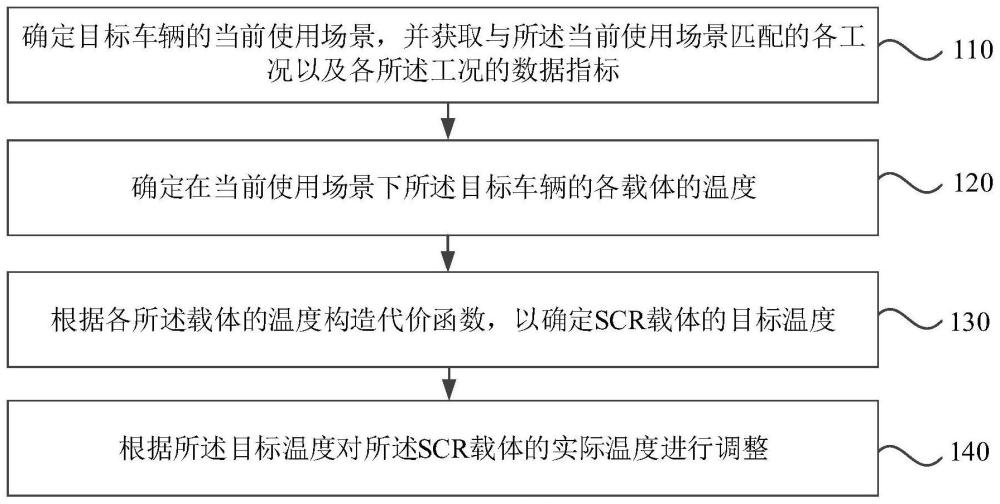
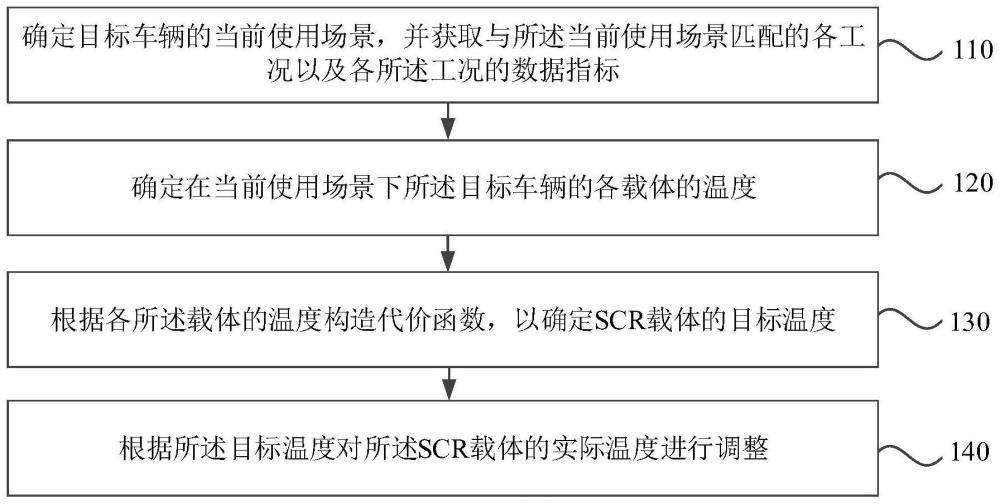
    图1是根据本发明实施例一提供的一种SCR的温度控制方法的流程图;

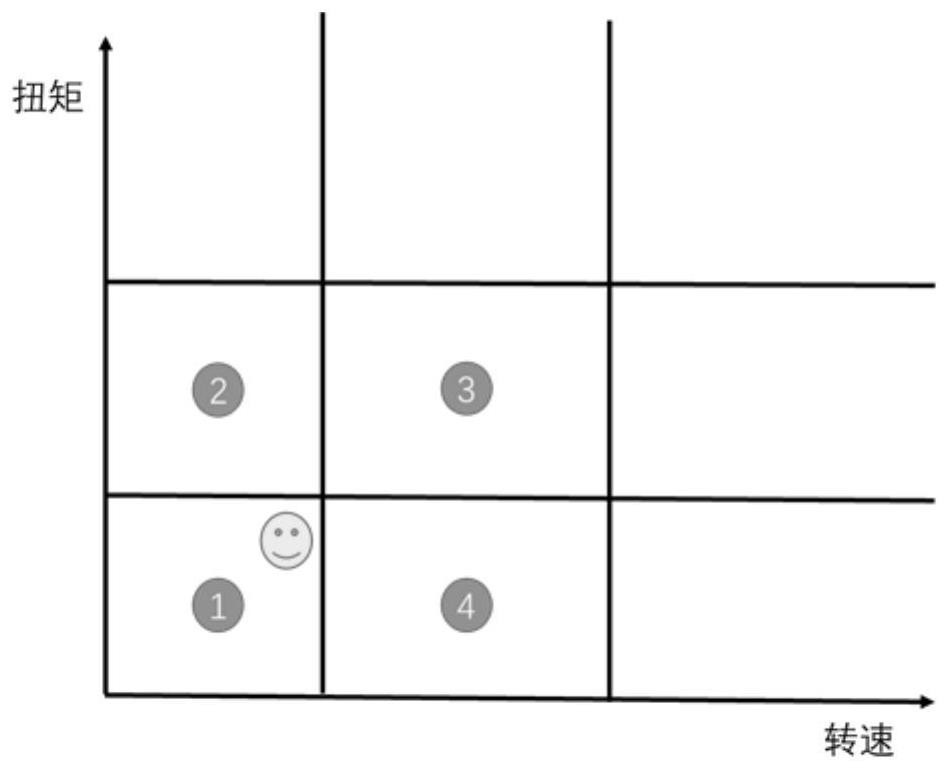
    图2是根据本发明实施例一提供的一种工况范围划定的示意图;

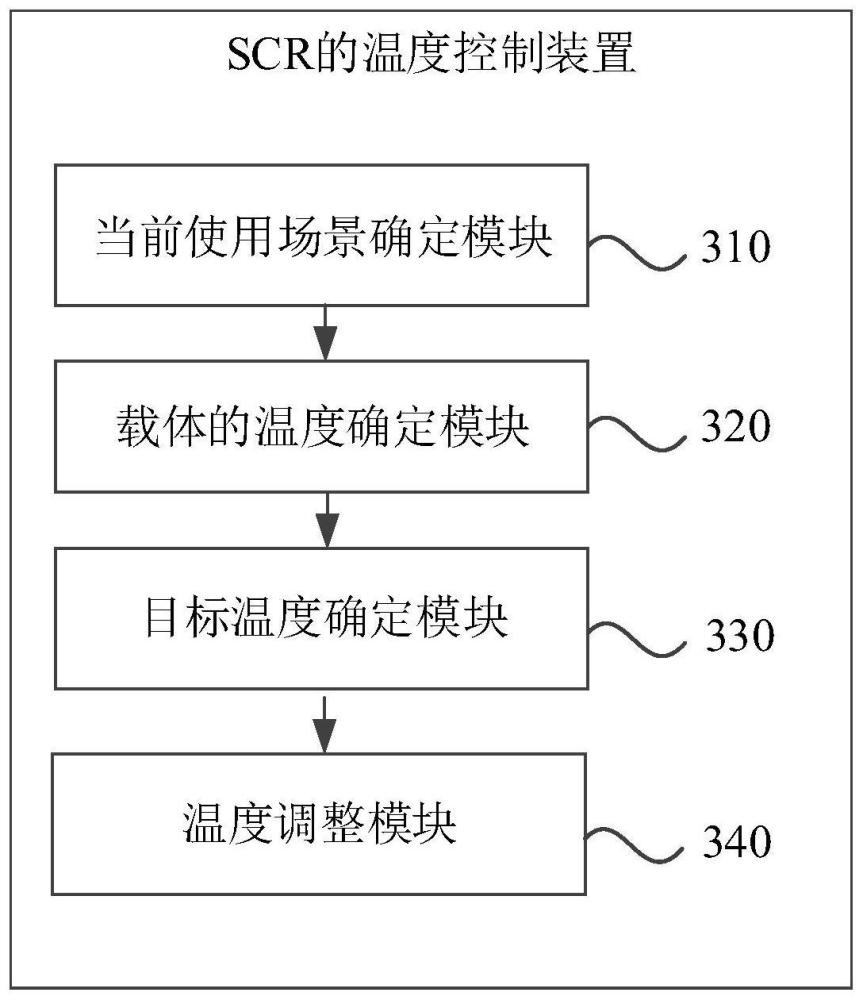
    图3是根据本发明实施例二提供的一种SCR的温度控制装置的结构示意图;

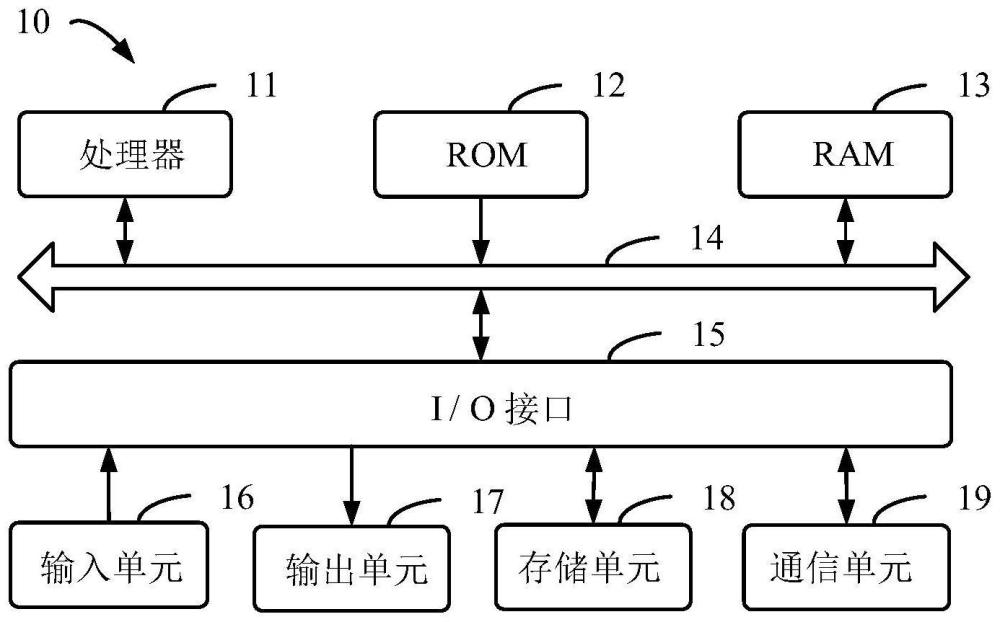
    图4是实现本发明实施例的SCR的温度控制方法的电子设备的结构示意图。

    具体实施方式

    为了使本技术领域的人员更好地理解本发明实施例方案,下面将结合本发明实施例中的附图,对本发明实施例中的技术方案进行清楚、完整地描述,显然,所描述的实施例仅仅是本发明实施例一部分的实施例,而不是全部的实施例。基于本发明实施例中的实施例,本领域普通技术人员在没有做出创造性劳动前提下所获得的所有其他实施例,都应当属于本发明实施例保护的范围。

    需要说明的是,本发明实施例的说明书和权利要求书及上述附图中的术语“第一”、“第二”等是用于区别类似的对象,而不必用于描述特定的顺序或先后次序。应该理解这样使用的数据在适当情况下可以互换,以便这里描述的本发明实施例的实施例能够以除了在这里图示或描述的那些以外的顺序实施。此外,术语“包括”和“具有”以及他们的任何变形,意图在于覆盖不排他的包含,例如,包含了一系列步骤或单元的过程、方法、系统、产品或设备不必限于清楚地列出的那些步骤或单元,而是可包括没有清楚地列出的或对于这些过程、方法、产品或设备固有的其它步骤或单元。

    实施例一

    图1是根据本发明实施例一提供的一种SCR的温度控制方法的流程图,本实施例可适用于基于车辆的不同使用场景下的各工况对SCR的温度进行调整的情况,该方法可以由SCR的温度控制装置来执行,该SCR的温度控制装置可以采用硬件和/或软件的形式实现,该SCR的温度控制装置可配置于计算机、服务器或者平板电脑等电子设备中。具体的,参考图1,该方法具体包括如下步骤:

    步骤110、确定目标车辆的当前使用场景,并获取与所述当前使用场景匹配的各工况以及各所述工况的数据指标。

    其中,目标车辆可以为任一行驶车辆,本实施例中对其不加以限定,

    在本实施例中,当前使用场景可以包括下述至少一项:城市、拥堵路段、郊区、高速、快速路、山区以及厂区;各工况可以包括:倒拖、低怠速、低速行驶、中速行驶、高速低扭矩行驶、高速高扭矩行驶或者高怠速;各工况的数据指标可以包括下述至少一项:最大排温、最小排温以及排温油耗关系。

    可选的,在本实施例中,可以预先手机大量的车辆数据,进而对车辆信息与使用场景之间进行建模,即确定不同的车辆数据与不同的使用场景之间的关系,这样,在车辆的行驶过程中,通过获取车辆信息即可确定车辆的使用场景;其中,车辆信息可以包括车辆参数,例如,车速、扭矩以及档位;还可以包括环境参数,例如环境温度或者环境压力等;本实施例中对其不加以限定。

    在本实施例的一个可选实现方式中,确定目标车辆的当前使用场景,并获取与所述当前使用场景匹配的各工况以及各所述工况的数据指标,可以包括:获取所述目标车辆的当前车辆参数以及当前环境参数;所述当前车辆参数可以包括下述至少一项:车速、扭矩以及档位;所述当前环境参数可以包括环境温度和/或环境压力;并根据所述当前车辆参数以及所述当前环境参数确定所述当前使用场景;通过预先建立的各工况概率图确定与所述当前使用场景匹配的各工况;根据预先确定的各所述工况的范围划定,确定各所述工况的最大排温、最小排温以及排温油耗关系。

    在本实施例中,可以预先归纳不同的使用场景下的工况分布特点,示例性的,针对城市使用场景,其可以包括如下工况,倒拖、低怠速、低速行驶、中速行驶、高速低扭矩行驶、高速高扭矩行驶以及高怠速,每个工况出现的概率分别可以为10%、16%、20%、10%、0%、44%以及0%。

    在本实施例中,还可以为不同的使用场景下的每个工况进行范围划定,示例性的,图2是根据本发明实施例一提供的一种工况范围划定的示意图,图2中,将低怠速工况划定为1区域,可以记录该区域中心工况点的最大排温、最小排温,以及排温油耗关系;在本实施例中可以通过线性插值的方法确定该区域内任一点的最大排温、最小排温以及排温油耗关系;例如,针对区域1中的笑脸位置,可以通过区域1-4四个区域的中心位置(中心工况点)与该点之间的关系进行线性插值,从而得到该点的最大排温、最小排温以及排温油耗关系。

    步骤120、确定在当前使用场景下所述目标车辆的各载体的温度。

    在本实施例的一个可选实现方式中,在确定目标车辆的当前使用场景,并获取到与当前使用场景匹配的各工况以及各工况的数据指标之后,可以进一步的确定在当前使用场景下目标车辆的各载体的温度。

    其中,目标车辆的各载体可以包括柴油氧化催化剂(Diesel OxidationCatalyst,DOC)载体、颗粒捕集器(Diesel Particulate Filter,DPF)载体、混合器载体以及SCR载体,本实施例中对其不加以限定。

    可选的,在本实施例中,确定在当前使用场景下所述目标车辆的各载体的温度,可以包括:建立目标车辆的在所述当前使用场景下的后处理系统递推方程;根据所述后处理系统递推方程确定各所述载体的温度;其中,后处理系统包括下述至少一项:涡轮、排气管、柴油氧化催化剂DOC载体、颗粒捕集器DPF载体、混合器载体以及SCR载体。

    在具体实现中,载体的传热过程可以认为是排气与载体之间的对流换热以及载体与环境之间的温度耗散,如果忽略温度与环境的耗散作用,则载体温度有:

    x(k+1)=Ax(k)+Bu(k);

    则y(k)=[0 0 1]x(k);

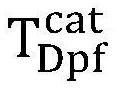
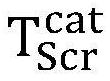
    其中,为DOC载体温度,为DPF载体温度,为SCR载体温度,为DOC入口气体温度,其他为可标定参数。

    在本实施例中,可以将递推方程分为两个部分,0~m步和m+1~m+k步,每部分内都以恒定DOC入口温度为目标,0~m步以当前状态递推,从第m+1步开始,工况点变化的可能性按照该场景下的工况分布概率。

    具体的,0~m步预测迭代方程为:

    x(m)=Amx(0)+(I-A)-1(Am-A)Bu(0);…;x(1)=Ax(0)+Bu(0);

    其中,x(0)为来自传感器对每个载体温度的估计:

    T1、T2、T3及T4分别为温度传感器测量值。

    m+1~m+k步预测迭代方程为:

    x(m+k)=Am+kx(0)+Ak(I-A)-1(Am-A)Bu(0)+(I-

    A)-1(Ak-A)Bu(1);…。

    步骤130、根据各所述载体的温度构造代价函数,以确定SCR载体的目标温度。

    在本实施例的一个可选实现方式中,在确定得到目标车辆的各载体的温度之后,可以进一步的根据各载体的温度构造得到代价函数,从而根据构造得到的代价函数确定SCR载体在当前使用场景下的目标温度。

    可选的,在本实施例中,构造得到的代价函数可以包含三项,分别为:高于参考限值温度时,满足目标后处理温度的最佳期望排温计算;低于参考限值温度时最佳期望排温计算;满足最低油耗的排温计算。

    可选的,在本实施例中,确定SCR载体的目标温度,可以包括:对所述代价函数进行求解,得到所述SCR载体的目标温度。

    在本实施例的一个可选实现方式中,在构造得到代价函数之后,可以进一步的通过最小二乘法对构造得到的代价函数进行求解,从而得到SCR载体的目标温度。

    可以理解的是,SCR载体的目标温度即为可以使发动机的排放物完全转化为无害的氮气和水的催化温度,本实施例中对其大小不作限定。

    示例性的,构造得到的代价函数可以为:

    E~Ak(I-A)-1(Am-A)B;

    F~(I-A)-1(Ak-A)B;

    G~[0 0 1][Am+kx(0)];

    min

    其中,Tref为参考排温,可以根据发动机转速和喷油量查表得到,其他为标定拟合参数,score为对应评分,Fre为对应频率,r为目标SCR载体温度,α为对应工况点排温增加量与油耗增加量的比值,max和min可以分别为图2中的笑脸工况点的最大最小温度,求Min(CF)。

    示例性的,在本实施例的一个具体例子中,目标车辆在当前使用场景下,高速高扭矩占比44%,该工况最低平均排温(无热管理)为300℃;低怠速16%,最低平均排温为120℃;其他为中速行驶,占比40%,最低平均温度250℃。参考限值温度为260℃,高速高扭矩时,300℃>260℃,u(1)=300℃,低怠速时,120℃<260℃,u(1)为未知数,同理中速行驶时,u(1)同为未知数;因此

    在上述例子中,第一项占44%的概率,计算高速高扭矩时的期望最佳排温u(0),第二项占16+40%的概率,计算中速行驶和怠速的期望最佳排温u(0)和u(1),第三项为中速行驶时最低油耗时排温,计算当前所处工况的最低油耗时排温,第四项为低怠速工况下最低油耗时排温,第五项占m/(m+k),以此获得综合最佳油耗下的u(0)和u(1)最佳值。

    步骤140、根据所述目标温度对所述SCR载体的实际温度进行调整。

    可选的,在本实施例中,在确定得到目标车辆在当前使用场景下的SCR载体的目标温度之后,可以进一步的根据所确定的目标温度对SCR载体的

    在本实施例的一个可选实现方式中,根据所述目标温度对所述SCR载体的实际温度进行调整,可以包括:当所述实际温度等于所述目标温度时,正常排放;当所述实际温度小于所述目标温度时,加大燃油消耗,以提升所述实际温度;当所述实际温度大于所述目标温度时,减小燃油消耗,以降低所述实际温度。

    本实施例的技术方案,通过确定目标车辆的当前使用场景,并获取与所述当前使用场景匹配的各工况以及各所述工况的数据指标;确定在当前使用场景下所述目标车辆的各载体的温度;根据各所述载体的温度构造代价函数,以确定SCR载体的目标温度;根据所述目标温度对所述SCR载体的实际温度进行调整,解决了燃油消耗较多的问题,可以实现精准地对SCR的温度进行控制,减少燃油的消耗。

    本发明实施例的技术方案中,所涉及用户个人信息(如人脸信息、语音信息等)的获取,存储和应用等,均符合相关法律法规的规定,且不违背公序良俗。

    实施例二

    图3是根据本发明实施例三提供的一种SCR的温度控制装置的结构示意图。如图3所示,该装置包括:当前使用场景确定模块310、载体的温度确定模块320、目标温度确定模块330以及温度调整模块340。

    当前使用场景确定模块310,用于确定目标车辆的当前使用场景,并获取与所述当前使用场景匹配的各工况以及各所述工况的数据指标;

    载体的温度确定模块320,用于确定在当前使用场景下所述目标车辆的各载体的温度;

    目标温度确定模块330,用于根据各所述载体的温度构造代价函数,以确定选择性催化转换器SCR载体的目标温度;

    温度调整模块340,用于根据所述目标温度对所述SCR载体的实际温度进行调整。

    本实施例的方案,通过当前使用场景确定模块确定目标车辆的当前使用场景,并获取与所述当前使用场景匹配的各工况以及各所述工况的数据指标;通过载体的温度确定模块确定在当前使用场景下所述目标车辆的各载体的温度;通过目标温度确定模块根据各所述载体的温度构造代价函数,以确定选择性催化转换器SCR载体的目标温度;通过温度调整模块根据所述目标温度对所述SCR载体的实际温度进行调整,解决了燃油消耗较多的问题,可以实现精准地对SCR的温度进行控制,减少燃油的消耗。

    在本实施例的一个可选实现方式中,所述当前使用场景包括下述至少一项:

    城市、拥堵路段、郊区、高速、快速路、山区以及厂区;

    各所述工况包括:

    倒拖、低怠速、低速行驶、中速行驶、高速低扭矩行驶、高速高扭矩行驶或者高怠速;

    所述数据指标包括下述至少一项:

    最大排温、最小排温以及排温油耗关系。

    在本实施例的一个可选实现方式中,当前使用场景确定模块310,具体用于获取所述目标车辆的当前车辆参数以及当前环境参数;所述当前车辆参数包括下述至少一项:车速、扭矩以及档位;所述当前环境参数包括环境温度和/或环境压力;

    并根据所述当前车辆参数以及所述当前环境参数确定所述当前使用场景;

    通过预先建立的各工况概率图确定与所述当前使用场景匹配的各工况;

    根据预先确定的各所述工况的范围划定,确定各所述工况的最大排温、最小排温以及排温油耗关系。

    在本实施例的一个可选实现方式中,载体的温度确定模块320,具体用于建立目标车辆的在所述当前使用场景下的后处理系统递推方程;

    根据所述后处理系统递推方程确定各所述载体的温度;

    其中,后处理系统包括下述至少一项:

    涡轮、排气管、柴油氧化催化剂DOC载体、颗粒捕集器DPF载体、混合器载体以及SCR载体。

    在本实施例的一个可选实现方式中,所述代价函数包含三项,分别为:

    高于参考限值温度时,满足目标后处理温度的最佳期望排温计算;

    低于参考限值温度时最佳期望排温计算;

    满足最低油耗的排温计算。

    在本实施例的一个可选实现方式中,目标温度确定模块330,具体用于对所述代价函数进行求解,得到所述SCR载体的目标温度。

    在本实施例的一个可选实现方式中,温度调整模块340,具体用于当所述实际温度等于所述目标温度时,正常排放;

    当所述实际温度小于所述目标温度时,加大燃油消耗,以提升所述实际温度;

    当所述实际温度大于所述目标温度时,减小燃油消耗,以降低所述实际温度。

    本发明实施例所提供的SCR的温度控制装置可执行本发明实施例任意实施例所提供的SCR的温度控制方法,具备执行方法相应的功能模块和有益效果。

    实施例三

    图4示出了可以用来实施本发明实施例的实施例的电子设备10的结构示意图。电子设备旨在表示各种形式的数字计算机,诸如,膝上型计算机、台式计算机、工作台、个人数字助理、服务器、刀片式服务器、大型计算机、和其它适合的计算机。电子设备还可以表示各种形式的移动装置,诸如,个人数字处理、蜂窝电话、智能电话、可穿戴设备(如头盔、眼镜、手表等)和其它类似的计算装置。本文所示的部件、它们的连接和关系、以及它们的功能仅仅作为示例,并且不意在限制本文中描述的和/或者要求的本发明实施例的实现。

    如图4所示,电子设备10包括至少一个处理器11,以及与至少一个处理器11通信连接的存储器,如只读存储器(ROM)12、随机访问存储器(RAM)13等,其中,存储器存储有可被至少一个处理器执行的计算机程序,处理器11可以根据存储在只读存储器(ROM)12中的计算机程序或者从存储单元18加载到随机访问存储器(RAM)13中的计算机程序,来执行各种适当的动作和处理。在RAM 13中,还可存储电子设备10操作所需的各种程序和数据。处理器11、ROM 12以及RAM 13通过总线14彼此相连。输入/输出(I/O)接口15也连接至总线14。

    电子设备10中的多个部件连接至I/O接口15,包括:输入单元16,例如键盘、鼠标等;输出单元17,例如各种类型的显示器、扬声器等;存储单元18,例如磁盘、光盘等;以及通信单元19,例如网卡、调制解调器、无线通信收发机等。通信单元19允许电子设备10通过诸如因特网的计算机网络和/或各种电信网络与其他设备交换信息/数据。

    处理器11可以是各种具有处理和计算能力的通用和/或专用处理组件。处理器11的一些示例包括但不限于中央处理单元(CPU)、图形处理单元(GPU)、各种专用的人工智能(AI)计算芯片、各种运行机器学习模型算法的处理器、数字信号处理器(DSP)、以及任何适当的处理器、控制器、微控制器等。处理器11执行上文所描述的各个方法和处理,例如SCR的温度控制方法。

    在一些实施例中,SCR的温度控制方法可被实现为计算机程序,其被有形地包含于计算机可读存储介质,例如存储单元18。在一些实施例中,计算机程序的部分或者全部可以经由ROM 12和/或通信单元19而被载入和/或安装到电子设备10上。当计算机程序加载到RAM 13并由处理器11执行时,可以执行上文描述的SCR的温度控制方法的一个或多个步骤。备选地,在其他实施例中,处理器11可以通过其他任何适当的方式(例如,借助于固件)而被配置为执行SCR的温度控制方法。

    本文中以上描述的系统和技术的各种实施方式可以在数字电子电路系统、集成电路系统、场可编程门阵列(FPGA)、专用集成电路(ASIC)、专用标准产品(ASSP)、芯片上系统的系统(SOC)、负载可编程逻辑设备(CPLD)、计算机硬件、固件、软件、和/或它们的组合中实现。这些各种实施方式可以包括:实施在一个或者多个计算机程序中,该一个或者多个计算机程序可在包括至少一个可编程处理器的可编程系统上执行和/或解释,该可编程处理器可以是专用或者通用可编程处理器,可以从存储系统、至少一个输入装置、和至少一个输出装置接收数据和指令,并且将数据和指令传输至该存储系统、该至少一个输入装置、和该至少一个输出装置。

    用于实施本发明实施例的方法的计算机程序可以采用一个或多个编程语言的任何组合来编写。这些计算机程序可以提供给通用计算机、专用计算机或其他可编程数据处理装置的处理器,使得计算机程序当由处理器执行时使流程图和/或框图中所规定的功能/操作被实施。计算机程序可以完全在机器上执行、部分地在机器上执行,作为独立软件包部分地在机器上执行且部分地在远程机器上执行或完全在远程机器或服务器上执行。

    在本发明实施例的上下文中,计算机可读存储介质可以是有形的介质,其可以包含或存储以供指令执行系统、装置或设备使用或与指令执行系统、装置或设备结合地使用的计算机程序。计算机可读存储介质可以包括但不限于电子的、磁性的、光学的、电磁的、红外的、或半导体系统、装置或设备,或者上述内容的任何合适组合。备选地,计算机可读存储介质可以是机器可读信号介质。机器可读存储介质的更具体示例会包括基于一个或多个线的电气连接、便携式计算机盘、硬盘、随机存取存储器(RAM)、只读存储器(ROM)、可擦除可编程只读存储器(EPROM或快闪存储器)、光纤、便捷式紧凑盘只读存储器(CD-ROM)、光学储存设备、磁储存设备、或上述内容的任何合适组合。

    为了提供与用户的交互,可以在电子设备上实施此处描述的系统和技术,该电子设备具有:用于向用户显示信息的显示装置(例如,CRT(阴极射线管)或者LCD(液晶显示器)监视器);以及键盘和指向装置(例如,鼠标或者轨迹球),用户可以通过该键盘和该指向装置来将输入提供给电子设备。其它种类的装置还可以用于提供与用户的交互;例如,提供给用户的反馈可以是任何形式的传感反馈(例如,视觉反馈、听觉反馈、或者触觉反馈);并且可以用任何形式(包括声输入、语音输入或者、触觉输入)来接收来自用户的输入。

    可以将此处描述的系统和技术实施在包括后台部件的计算系统(例如,作为数据服务器)、或者包括中间件部件的计算系统(例如,应用服务器)、或者包括前端部件的计算系统(例如,具有图形用户界面或者网络浏览器的用户计算机,用户可以通过该图形用户界面或者该网络浏览器来与此处描述的系统和技术的实施方式交互)、或者包括这种后台部件、中间件部件、或者前端部件的任何组合的计算系统中。可以通过任何形式或者介质的数字数据通信(例如,通信网络)来将系统的部件相互连接。通信网络的示例包括:局域网(LAN)、广域网(WAN)、区块链网络和互联网。

    计算系统可以包括客户端和服务器。客户端和服务器一般远离彼此并且通常通过通信网络进行交互。通过在相应的计算机上运行并且彼此具有客户端-服务器关系的计算机程序来产生客户端和服务器的关系。服务器可以是云服务器,又称为云计算服务器或云主机,是云计算服务体系中的一项主机产品,以解决了传统物理主机与VPS服务中,存在的管理难度大,业务扩展性弱的缺陷。

    应该理解,可以使用上面所示的各种形式的流程,重新排序、增加或删除步骤。例如,本发明实施例中记载的各步骤可以并行地执行也可以顺序地执行也可以不同的次序执行,只要能够实现本发明实施例的技术方案所期望的结果,本文在此不进行限制。

    上述具体实施方式,并不构成对本发明实施例保护范围的限制。本领域技术人员应该明白的是,根据设计要求和其他因素,可以进行各种修改、组合、子组合和替代。任何在本发明实施例的精神和原则之内所作的修改、等同替换和改进等,均应包含在本发明实施例保护范围之内。

    SCR的温度控制方法、装置、设备及介质

    Technical field

    The embodiment of the present invention relates to the technical field of automobile engine control, in particular to a temperature control method, device, equipment and medium of SCR.

    Background technology

    With the continuous progress and development of science and technology, nature has also been damaged to varying degrees, and natural disasters such as greenhouse effect, haze, and acid rain have also continued to occur. Humanity needs to choose a way to coexist in order to maintain ecological balance and protect the home on which it depends. Harmful emissions are the main culprits of air pollution, they come from factories, they come from vehicles. For the sake of people's health, countries around the world have clear regulations on harmful emissions, which also promotes the progress of low-emission technologies; Since the birth of the internal combustion engine more than 100 years ago, it has provided too much convenience for human beings, and its harmful emissions are also the largest source of pollution.

    The most common way to eliminate nitrogen oxides is to use a selective catalytic converter (SCR), the main principle of which is that ammonia and nitrogen oxides are produced harmless nitrogen and water under the action of catalysts. The catalytic condition is to meet a certain temperature, in order to keep the SCR above a certain temperature at all times, the usual practice is to leave a certain temperature margin, and when the exhaust temperature is not enough, the active way to increase the exhaust temperature is adopted, which will bring more fuel consumption.

    How to accurately control the temperature of SCR and reduce fuel consumption is the key research issue in the industry.

    Contents of the invention

    The embodiment of the present invention provides a temperature control method, device, equipment and medium of SCR to solve the problem of more fuel consumption, and the temperature of SCR can be accurately controlled, and the consumption of fuel is reduced.

    According to one aspect of the embodiment of the present invention, a temperature control method of SCR is provided, comprising:

    determining the current usage scenario of the target vehicle, and obtaining each working condition and the data index of each working condition matching the current use scenario;

    determining the temperature of each carrier of the target vehicle in the current use scenario;

    construct a cost function according to the temperature of each carrier to determine the target temperature of the SCR carrier;

    The actual temperature of the SCR carrier is adjusted according to the target temperature.

    According to another aspect of the embodiment of the present invention, a temperature control device for SCR is provided, comprising:

    the current usage scenario determination module is used for determining the current usage scenario of the target vehicle, and obtains each working condition and the data index of each working condition matched with the current use scenario;

    the temperature determination module of the carrier is used for determining the temperature of each carrier of the target vehicle in the current use scenario;

    the target temperature determination module is used for constructing a cost function according to the temperature of each carrier to determine the target temperature of the SCR carrier;

    the temperature adjustment module is used for adjusting the actual temperature of the SCR carrier according to the target temperature.

    According to another aspect of the embodiment of the present invention, an electronic device is provided, which comprises:

    At least one processor; and

    a memory connected to at least one processor; thereinto

    the memory stores a computer program that can be executed by at least one processor, and the computer program is executed by at least one processor so that the at least one processor can perform a temperature control method for SCR described in any embodiment of the present invention.

    According to the other aspect of the embodiment of the present invention, a computer-readable storage medium is provided, the computer-readable storage medium is stored with computer instructions, and the computer instructions are used to realize the temperature control method of the SCR described in any embodiment of the present invention when the processor is executed.

    the technical scheme of the embodiment of the present invention by determining the current use scenario of the target vehicle and obtaining each working condition and the data index of each described working condition matched with the current use scenario; determining the temperature of each carrier of the target vehicle in the current use scenario; construct a cost function according to the temperature of each carrier to determine the target temperature of the SCR carrier; adjusting the actual temperature of the SCR carrier according to the target temperature solves the problem of more fuel consumption, can accurately control the temperature of the SCR, and reduces the fuel consumption.

    It should be understood that the content described in this part is not intended to identify the key or important features of the embodiments of the present invention, nor is it intended to limit the scope of the embodiments of the present invention. Other features of the embodiments of the present invention will be easily understood by the following description.

    Description of the drawings

    In order to more clearly illustrate the technical solutions in the embodiments of the present invention, the drawings that need to be used in the description of the embodiments will be briefly introduced below, and it is obvious that the drawings in the following description are only some embodiments of the embodiments of the present invention, and for those skilled in the art, other drawings can also be obtained according to these drawings without paying creative labor.

    FIG. 1 is a flow chart of a temperature control method of SCR provided according to embodiment one of the present invention;

    Fig. 2 is a schematic diagram of the delineation of a working condition range provided according to embodiment one of the present invention;

    Fig. 3 is a schematic diagram of the structure of a temperature control device of SCR provided according to embodiment two of the present invention;

    FIG. 4 is a schematic diagram of the structure of the electronic device that realizes the temperature control method of the SCR of the embodiment of the present invention.

    The specific embodiment

    In order to enable persons in the art to better understand the embodiments of the present invention, the technical solutions in the embodiments of the present invention will be clearly and completely described below in conjunction with the accompanying drawings in the embodiments of the present invention. Based on the embodiments in the embodiments of the present invention, all other embodiments obtained by a person skilled in the art without making creative work shall fall within the scope of protection of the embodiments of the present invention.

    It should be noted that the terms "first", "second", etc. in the description and claims of the embodiments of the present invention and the above-mentioned drawings are used to distinguish similar objects, and do not need to be used to describe a specific order or sequence. It should be understood that the data so used are interchangeable where appropriate so that the embodiments of the embodiments of the present invention described here can be implemented in a order other than those illustrated or described here. In addition, the terms "including" and "having" and any variation thereof are intended to cover non-exclusive inclusions, e.g., a process, method, system, product or apparatus comprising a series of steps or elements need not be limited to those steps or elements that are clearly listed, but may include other steps or elements that are not clearly listed or are inherent to those processes, methods, products or equipment.

    Embodiment one

    Fig. 1 is a flow chart of a temperature control method of SCR provided according to the embodiment of the present invention, the present embodiment can be applied to the situation that the temperature of SCR is adjusted based on each working condition in different use scenarios of vehicle, this method can be carried out by the temperature control device of SCR, the temperature control device of SCR can be realized in the form of hardware and/or software, and the temperature control device of SCR can be configured in electronic equipment such as computer, server or tablet computer. Specifically, referring to Figure 1, the method specifically comprises the following steps:

    step 110, determine the current use scenario of target vehicle, and obtain each working condition and the data index of each described working condition matched with described current use scene.

    wherein, the target vehicle may be any driving vehicle, and it is not limited in this embodiment,

    In this embodiment, the current use scenario may include at least one of the following: an urban, a congested road section, a suburban area, a highway, an expressway, a mountainous area, and a factory area; Each working condition can include: reverse dragging, low idling, low-speed driving, medium-speed driving, high-speed low-torque driving, high-speed high-torque driving or high idling; The data indicators for each working condition can include at least one of the following: maximum exhaust temperature, minimum exhaust temperature, and the relationship between exhaust temperature and fuel consumption.

    Optionally, in this embodiment, a large amount of vehicle data can be mobile phones in advance, and then modeling between vehicle information and use scenarios, that is, determining the relationship between different vehicle data and different use scenarios, so that in the driving process of the vehicle, the use scenarios of the vehicle can be determined by obtaining vehicle information; Among them, the vehicle information can include vehicle parameters, such as speed, torque, and gear; It can also include environmental parameters such as ambient temperature or pressure; It is not limited in this embodiment.

    In an optional embodiment of the present embodiment, determining the current use scenario of the target vehicle and obtaining each working condition and the data index of each working condition matched with the current use scenario may comprise: obtaining the current vehicle parameters and current environmental parameters of the target vehicle; The current vehicle parameters may include at least one of the following: vehicle speed, torque and gear; The current environmental parameters may include ambient temperature and/or ambient pressure; and determining the current use scenario according to the current vehicle parameters and the current environmental parameters; each working condition matching the current use scenario is determined through a pre-established probability chart of each working condition; According to the range delineation of each described working condition that is predetermined, determine the maximum exhaust temperature, the minimum exhaust temperature and the exhaust temperature fuel consumption relationship of each described working condition.

    In the present embodiment, the distribution characteristics of working conditions under different use scenarios can be summarized in advance, and exemplatively, for urban use scenarios, it may include the following working conditions, reverse dragging, low idling, low-speed driving, medium-speed driving, high-speed low-torque driving, high-speed high-torque driving and high idling, and the probability of occurrence of each working condition can be 10%, 16%, 20%, 10%, 0%, 44% and 0% respectively.

    In the present embodiment, the scope can also be delineated for each working condition under different use scenarios, exemplification, Fig. 2 is a schematic diagram of the delineation of a working condition range provided according to the embodiment of the present invention first, in Fig. 2, the low idle working condition is delineated as 1 area, the maximum exhaust temperature, the minimum exhaust temperature, and the exhaust temperature and fuel consumption relationship of the central working condition point of the area can be recorded; In the present embodiment, the maximum exhaust temperature, the minimum exhaust temperature and the exhaust temperature fuel consumption relationship of any point in the area can be determined by the method of linear interpolation; For example, for the position of the smiley face in region 1, the relationship between the center position (central working condition point) and the point can be linearly interpolated through the center position of the four regions 1-4, so as to obtain the relationship between the maximum exhaust temperature, the minimum exhaust temperature and the exhaust temperature and fuel consumption of the point.

    step 120, determine the temperature of each carrier of the target vehicle in the current use scenario.

    In an optional embodiment of the present embodiment, after determining the current use scenario of the target vehicle and obtaining each working condition and the data index of each working condition matched with the current use scenario, the temperature of each carrier of the target vehicle in the current use scenario can be further determined.

    Wherein, each carrier of the target vehicle may include a diesel oxidation catalyst (DOC) carrier, a particle trap (Diesel Particulate Filter, DPF) carrier, a mixer carrier and an SCR carrier, which are not limited in this embodiment.

    Optionally, in this embodiment, determining the temperature of each carrier of the target vehicle in the current use scenario may comprise: establishing a recursive equation for the target vehicle's post-processing system in the current use scenario; determining the temperature of each carrier according to the recursive equation of the post-processing system; Among them, the aftertreatment system includes at least one of the following: turbine, exhaust pipe, diesel oxidation catalyst DOC support, particle trap DPF support, mixer carrier and SCR support.

    In the specific implementation, the heat transfer process of the carrier can be regarded as the convective heat transfer between the exhaust gas and the carrier and the temperature dissipation between the carrier and the environment.

    x(k+1)=Ax(k)+Bu(k);

    if y(k)=[0 0 1]x(k);

    Among them, the DOC carrier temperature, the DPF carrier temperature, the SCR carrier temperature, the DOC inlet gas temperature, and the others are calibrable parameters.

    In the present embodiment, the recursive equation can be divided into two parts, 0~m step and m+1~m+k step, each part is aimed at a constant DOC inlet temperature, 0~m step is recursive in the current state, and from the m+1 step, the possibility of the change of the working condition point is according to the working condition distribution probability in this scenario.

    Specifically, the 0~m step prediction iteration equation is:

    x(m)=Amx(0)+(I-A)-1(Am-A)Bu(0); ...; x(1)=Ax(0)+Bu(0);

    where x(0) is the estimate of the temperature of each carrier from the sensor:

    T1, T2, T3 and T4 are the measured values of the temperature sensor.

    The prediction iterative equation of m+1~m+k steps is:

    x(m+k)=Am+kx(0)+Ak(I-A)-1(Am-A)Bu(0)+(I-

    A)-1(Ak-A)Bu(1); ...。

    step 130, construct a cost function according to the temperature of each carrier to determine the target temperature of the SCR carrier.

    In an optional embodiment of the present embodiment, after determining the temperature of each carrier of the target vehicle, a cost function can be further constructed according to the temperature of each carrier, so that the target temperature of the SCR carrier in the current use scenario can be determined according to the cost function obtained.

    Optionally, in the present embodiment, the cost function constructed may include three items, namely: the optimal expected exhaust temperature calculation to meet the target post-treatment temperature when the temperature is higher than the reference limit; Calculation of the optimal expected discharge temperature below the reference limit temperature; Exhaust temperature calculation to meet the minimum fuel consumption.

    Optionally, in the present embodiment, determining the target temperature of the SCR carrier may include: solving the cost function to obtain the target temperature of the SCR carrier.

    In an optional embodiment of the present embodiment, after the cost function is constructed, the cost function obtained by the construction can be further solved by the least squares method, so as to obtain the target temperature of the SCR carrier.

    It is understood that the target temperature of the SCR carrier is the catalytic temperature that can completely convert the emissions of the engine into harmless nitrogen and water, and its size is not limited in this embodiment.

    Exemplary, the resulting cost function can be:

    E~Ak(I-A)-1(Am-A)B;

    F~(I-A)-1(Ak-A)B;

    G~[0 0 1][Am+kx(0)];

    min

    Among them, Tref is the reference exhaust temperature, which can be obtained according to the engine speed and fuel injection volume, the others are the calibration fitting parameters, score is the corresponding score, Fre is the corresponding frequency, r is the temperature of the target SCR carrier, α is the ratio of the increase in exhaust temperature to the increase in fuel consumption at the corresponding working point, max and min can be the maximum and minimum temperature of the smiley working point in Figure 2 respectively, and find Min (CF).

    exemplary, in a specific example of the present embodiment, the target vehicle accounts for 44% of the high torque at high speed in the current use scenario, and the minimum average exhaust temperature (without thermal management) under this working condition is 300 °C; Low idle speed 16%, minimum average exhaust temperature of 120°C; The others are medium-speed driving, accounting for 40%, with a minimum average temperature of 250°C. The reference limit temperature is 260°C, at high speed and high torque, 300°C>260°C, u(1)=300°C, at low idle, 120°C<260°C, u(1) is unknown, and at medium speed, u(1) is also unknown; therefore

    In the above example, the first term accounts for 44% of the probability to calculate the expected optimal exhaust temperature u (0) at high speed and high torque, the second term accounts for 16+40% probability to calculate the expected optimal exhaust temperature u (0) and u (1) for medium-speed driving and idling, the third term is the minimum fuel consumption time exhaust temperature at medium speed, and calculates the minimum fuel consumption time exhaust temperature of the current working condition, the fourth term is the minimum fuel consumption time exhaust temperature under low idle working conditions, and the fifth term accounts for m/(m+k), so as to obtain the optimal values of u(0) and u(1) under the comprehensive optimal fuel consumption.

    step 140, adjusting the actual temperature of the SCR carrier according to the target temperature.

    Optionally, in this embodiment, after determining the target temperature of the SCR carrier of the target vehicle in the current use scenario, the SCR carrier may be further adjusted according to the determined target temperature

    In an optional embodiment of the present embodiment, the actual temperature of the SCR carrier is adjusted according to the target temperature, which may include: when the actual temperature is equal to the target temperature, normal discharge; when the actual temperature is less than the target temperature, the fuel consumption is increased to increase the actual temperature; When the actual temperature is greater than the target temperature, reduce the fuel consumption to reduce the actual temperature.

    the technical scheme of the embodiment, by determining the current use scenario of the target vehicle, and obtaining each working condition and the data index of each described working condition matched with the current use scenario; determining the temperature of each carrier of the target vehicle in the current use scenario; construct a cost function according to the temperature of each carrier to determine the target temperature of the SCR carrier; adjusting the actual temperature of the SCR carrier according to the target temperature solves the problem of more fuel consumption, can accurately control the temperature of the SCR, and reduces the fuel consumption.

    In the technical scheme of the embodiment of the present invention, the acquisition, storage and application of the user's personal information (such as face information, voice information, etc.) involved conform to the provisions of relevant laws and regulations, and do not violate public order and good customs.

    Embodiment two

    Fig. 3 is a schematic diagram of the structure of a temperature control device of SCR provided according to the embodiment of the present invention third instance. As shown in Figure 3, the device comprises: a current use scene determination module 310, a carrier temperature determination module 320, a target temperature determination module 330 and a temperature adjustment module 340.

    the current use scenario determination module 310 is used for determining the current use scenario of the target vehicle and obtaining each working condition and the data index of each working condition matched with the current use scenario;

    the temperature determination module 320 of the carrier is used for determining the temperature of each carrier of the target vehicle in the current use scenario;

    the target temperature determination module 330 is used for constructing a cost function according to the temperature of each carrier to determine the target temperature of the selective catalytic converter SCR carrier;

    the temperature adjustment module 340 is used for adjusting the actual temperature of the SCR carrier according to the target temperature.

    the scheme of the present embodiment, determining the current use scenario of the target vehicle through the current use scenario determination module, and obtaining each working condition and the data index of each working condition matched with the current use scenario; determining the temperature of each carrier of the target vehicle in the current use scenario through the temperature determination module of the carrier; through the target temperature determination module to construct a cost function according to the temperature of each carrier to determine the target temperature of the selective catalytic converter SCR carrier; The actual temperature of the SCR carrier is adjusted according to the target temperature through the temperature adjustment module, so that the problem of more fuel consumption is solved, and the temperature of the SCR can be accurately controlled, and the fuel consumption can be reduced.

    In an optional embodiment of the present embodiment, the current use scenario comprises at least one of the following:

    Cities, congested road sections, suburbs, highways, expressways, mountainous areas and factory areas;

    Each of these conditions comprises:

    Reverse dragging, low idling, low speed, medium speed, high speed and low torque driving, high-speed high-torque driving or high idling;

    The data indicators described include at least one of the following:

    The relationship between the maximum exhaust temperature, the minimum exhaust temperature and the exhaust temperature and fuel consumption.

    In an optional embodiment of the present embodiment, the current use scenario determines the module 310, specifically for obtaining the current vehicle parameters and the current environmental parameters of the target vehicle; The current vehicle parameter comprises at least one of the following: vehicle speed, torque and gear; Described current environmental parameters comprise ambient temperature and/or ambient pressure;

    and determining the current use scenario according to the current vehicle parameters and the current environmental parameters;

    each working condition matching the current use scenario is determined through a pre-established probability chart of each working condition;

    According to the range delineation of each described working condition that is predetermined, determine the maximum exhaust temperature, the minimum exhaust temperature and the exhaust temperature fuel consumption relationship of each described working condition.

    In an optional embodiment of the present embodiment, the temperature determination module 320 of the carrier is specifically used for establishing a recursive equation for the post-processing system of the target vehicle in the current use scenario;

    determining the temperature of each carrier according to the recursive equation of the post-processing system;

    Among them, the post-processing system includes at least one of the following:

    Turbines, exhaust pipes, diesel oxidation catalyst DOC carriers, particle trap DPF carriers, mixer carriers, and SCR carriers.

    In an optional embodiment of the present embodiment, the cost function comprises three items, which are as follows:

    When the temperature is higher than the reference limit, the optimal expected exhaust temperature calculation to meet the target post-processing temperature is met;

    Calculation of the optimal expected discharge temperature below the reference limit temperature;

    Exhaust temperature calculation to meet the minimum fuel consumption.

    In an optional embodiment of the present embodiment, the target temperature determination module 330 is specifically used for solving the cost function to obtain the target temperature of the SCR carrier.

    In an optional embodiment of the present embodiment, the temperature adjustment module 340 is specifically used for normal discharge when the actual temperature is equal to the target temperature;

    when the actual temperature is less than the target temperature, the fuel consumption is increased to increase the actual temperature;

    When the actual temperature is greater than the target temperature, reduce the fuel consumption to reduce the actual temperature.

    The temperature control device of the SCR provided in the embodiment of the present invention can perform the temperature control method of the SCR provided in any embodiment of the present invention in any embodiment, and has a functional module and beneficial effect corresponding to the execution method.

    Embodiment three

    FIG. 4 shows a schematic diagram of the structure of the electronic device 10 that can be used to implement the embodiments of the present invention. Electronic devices are intended to represent various forms of digital computers, such as laptops, desktop computers, workbenches, personal digital assistants, servers, blade servers, mainframe computers, and other appropriate computers. Electronic devices can also represent various forms of mobile devices, such as personal digitization, cellular phones, smartphones, wearable devices (e.g., helmets, glasses, watches, etc.) and other similar computing devices. The parts shown herein, their connections and relationships, and their functions are for example only and are not intended to limit the realization of the embodiments of the present invention described and/or required herein.

    As shown in Figure 4, the electronic device 10 comprises at least one processor 11 and the memory that is communicated with at least one processor 11, such as read-only memory (ROM) 12, random access memory (RAM) 13, etc., wherein the memory stores a computer program that can be executed by at least one processor, and the processor 11 can load a computer program into random access memory (RAM) 13 according to a computer program stored in read-only memory (ROM) 12 or from the storage unit 18to perform a variety of appropriate actions and treatments. In RAM 13, various programs and data required for the operation of electronic device 10 can also be stored. Processor 11, ROM 12 and RAM 13 are connected to each other via bus 14. The input/output (I/O) interface 15 is also connected to bus 14.

    A plurality of components in the electronic device 10 are connected to the I/O interface 15, comprising: input unit 16, such as keyboard, mouse, etc.; output unit 17, such as various types of displays, speakers, etc.; storage unit 18, such as disk, optical disc, etc.; and communication unit 19, such as network card, modem, wireless communication transceiver, etc. The communication unit 19 allows electronic devices 10 to exchange information/data with other devices through computer networks such as the Internet and/or various telecommunications networks.

    Processor11 can be a variety of general-purpose and/or specialized processing components with processing and computing power. Some examples of processors11 include, but are not limited to, central processing units (CPUs), graphics processing units (GPUs), various specialized artificial intelligence (AI) computing chips, various processors running machine learning model algorithms, digital signal processors (DSPs), and any appropriate processors, controllers, microcontrollers, etc. The processor 11 performs the various methods and processes described above, such as the temperature control method of the SCR.

    In some embodiments, the temperature control method of the SCR may be implemented as a computer program which is tangibly contained in a computer-readable storage medium, such as a storage unit 18. In some embodiments, part or all of the computer program may be loaded and/or mounted onto the electronic device 10 by means of ROM 12 and/or communication unit 19. When a computer program is loaded into RAM 13 and executed by processor 11, one or more steps of the temperature control method of the SCR described above can be performed. Alternatively, in other embodiments, the processor 11 may be configured to perform a temperature control method for SCR by any other appropriate means (e.g., with the help of firmware).

    The various implementations of the systems and technologies described above in this article can be implemented in digital electronic circuit systems, integrated circuit systems, field-programmable gate arrays (FPGAs), application-specific integrated circuits (ASICs), application-specific standard products (ASSPs), system-on-chips (SOCs), load-programmable logic devices (CPLDs), computer hardware, firmware, software, and/or a combination thereof. These various embodiments may include the implementation of one or more computer programs that may be executed and/or interpreted on a programmable system comprising at least one programmable processor, which may be specialized or general-purpose programmable processors that receive data and instructions from a storage system, at least one input device, and at least one output device, and transmit the data and instructions to the storage system, at least one input device, and at least one output device.

    A computer program used to implement an embodiment of the present invention may be written in any combination of one or more programming languages. These computer programs may be provided to the processors of general-purpose computers, specialized computers, or other programmable data processing devices so that the computer programs, when executed by the processors, enable the functions/operations specified in the flowcharts and/or block diagrams to be performed. A computer program can be executed entirely on a machine, partially on a machine, partially on a machine and partially on a remote machine as a stand-alone software package, or entirely on a remote machine or server.

    In the context of the embodiments of the present invention, a computer-readable storage medium may be a tangible medium that may contain or store a computer program for use by or in combination with an instruction-executing system, apparatus or apparatus. Computer-readable storage media may include, but are not limited to, electronic, magnetic, optical, electromagnetic, infrared, or semiconductor systems, devices, or devices, or any appropriate combination thereof. Alternatively, a computer-readable storage medium may be a machine-readable signal medium. More specific examples of machine-readable storage media would include electrical connections based on one or more wires, laptop disks, hard disks, random access memory (RAM), read-only memory (ROM), erasable programmable read-only memory (EPROM or flash memory), optical fiber, portable compact disk read-only memory (CD-ROM), optical storage devices, magnetic storage devices, or any suitable combination of the above.

    In order to provide interaction with the user, the systems and techniques described herein may be implemented on an electronic device that has: a display device (e.g., a CRT (cathode ray tube) or an LCD (liquid crystal display) monitor) for displaying information to the user; and a keyboard and pointing device (e.g., a mouse or trackball) that allows the user to provide input to the electronic device. Other types of devices may also be used to provide interaction with the user; For example, feedback provided to users may be any form of sensory feedback (e.g., visual, auditory, or haptic); and can receive input from the user in any form, including audible, voice, or haptic input.

    The systems and technologies described herein may be implemented in a computing system that includes a back-end component (e.g., as a data server), or a computing system that includes a middleware component (e.g., an application server), or a computing system that includes a front-end component (e.g., a user computer with a graphical user interface or a web browser through which the user can interact with the implementation of the systems and technologies described herein), or includes such back-end components, middleware components, or any combination of front-end components in a computing system. The components of a system can be connected to each other by means of digital data communication in any form or medium (e.g., communication networks). Examples of communication networks include: Local Area Networks (LANs), Wide Area Networks (WANs), Blockchain Networks, and the Internet.

    A computing system can include both a client and a server. Clients and servers are generally far away from each other and often interact over communication networks. A client-server relationship arises from computer programs that run on the corresponding computer and have a client-server relationship with each other. The server can be a cloud server, also known as a cloud computing server or cloud host, which is a host product in the cloud computing service system, which solves the defects of difficult management and weak business scalability in traditional physical hosting and VPS services.

    It should be understood that steps can be reordered, added, or removed using the various forms of processes shown above. For example, the steps described in the embodiments of the present invention may be executed in parallel, sequentially, or in different sequences, and as long as the desired result of the technical solution of the embodiments of the present invention can be achieved, this article is not limited herein.

    The above specific embodiments do not constitute a limitation on the scope of protection of the embodiments of the present invention. Those skilled in the art should understand that various modifications, combinations, subcombinations, and substitutions can be made according to design requirements and other factors. Any modifications, equivalent substitutions and improvements made within the spirit and principles of the embodiments of the present invention shall be included in the protection scope of the embodiments of the present invention.

    Temperature control methods, devices, equipment and media of SCR

    Technical field

    The embodiment of the present invention relates to the technical field of automobile engine control, in particular to a temperature control method, device, equipment and medium of SCR.

    Background technology

    With the continuous progress and development of science and technology, nature has also been damaged to varying degrees, and natural disasters such as greenhouse effect, haze, and acid rain have also continued to occur. Humanity needs to choose a way to coexist in order to maintain ecological balance and protect the home on which it depends. Harmful emissions are the main culprits of air pollution, they come from factories, they come from vehicles. For the sake of people's health, countries around the world have clear regulations on harmful emissions, which also promotes the progress of low-emission technologies; Since the birth of the internal combustion engine more than 100 years ago, it has provided too much convenience for human beings, and its harmful emissions are also the largest source of pollution.

    The most common way to eliminate nitrogen oxides is to use a selective catalytic converter (SCR), the main principle of which is that ammonia and nitrogen oxides are produced harmless nitrogen and water under the action of catalysts. The catalytic condition is to meet a certain temperature, in order to keep the SCR above a certain temperature at all times, the usual practice is to leave a certain temperature margin, and when the exhaust temperature is not enough, the active way to increase the exhaust temperature is adopted, which will bring more fuel consumption.

    How to accurately control the temperature of SCR and reduce fuel consumption is the key research issue in the industry.

    Contents of the invention

    The embodiment of the present invention provides a temperature control method, device, equipment and medium of SCR to solve the problem of more fuel consumption, and the temperature of SCR can be accurately controlled, and the consumption of fuel is reduced.

    According to one aspect of the embodiment of the present invention, a temperature control method of SCR is provided, comprising:

    determining the current usage scenario of the target vehicle, and obtaining each working condition and the data index of each working condition matching the current use scenario;

    determining the temperature of each carrier of the target vehicle in the current use scenario;

    construct a cost function according to the temperature of each carrier to determine the target temperature of the SCR carrier;

    The actual temperature of the SCR carrier is adjusted according to the target temperature.

    According to another aspect of the embodiment of the present invention, a temperature control device for SCR is provided, comprising:

    the current usage scenario determination module is used for determining the current usage scenario of the target vehicle, and obtains each working condition and the data index of each working condition matched with the current use scenario;

    the temperature determination module of the carrier is used for determining the temperature of each carrier of the target vehicle in the current use scenario;

    the target temperature determination module is used for constructing a cost function according to the temperature of each carrier to determine the target temperature of the SCR carrier;

    the temperature adjustment module is used for adjusting the actual temperature of the SCR carrier according to the target temperature.

    According to another aspect of the embodiment of the present invention, an electronic device is provided, which comprises:

    At least one processor; and

    a memory connected to at least one processor; thereinto

    the memory stores a computer program that can be executed by at least one processor, and the computer program is executed by at least one processor so that the at least one processor can perform a temperature control method for SCR described in any embodiment of the present invention.

    According to the other aspect of the embodiment of the present invention, a computer-readable storage medium is provided, the computer-readable storage medium is stored with computer instructions, and the computer instructions are used to realize the temperature control method of the SCR described in any embodiment of the present invention when the processor is executed.

    the technical scheme of the embodiment of the present invention by determining the current use scenario of the target vehicle and obtaining each working condition and the data index of each described working condition matched with the current use scenario; determining the temperature of each carrier of the target vehicle in the current use scenario; construct a cost function according to the temperature of each carrier to determine the target temperature of the SCR carrier; adjusting the actual temperature of the SCR carrier according to the target temperature solves the problem of more fuel consumption, can accurately control the temperature of the SCR, and reduces the fuel consumption.

    It should be understood that the content described in this part is not intended to identify the key or important features of the embodiments of the present invention, nor is it intended to limit the scope of the embodiments of the present invention. Other features of the embodiments of the present invention will be easily understood by the following description.

    Description of the drawings

    In order to more clearly illustrate the technical solutions in the embodiments of the present invention, the drawings that need to be used in the description of the embodiments will be briefly introduced below, and it is obvious that the drawings in the following description are only some embodiments of the embodiments of the present invention, and for those skilled in the art, other drawings can also be obtained according to these drawings without paying creative labor.

    FIG. 1 is a flow chart of a temperature control method of SCR provided according to embodiment one of the present invention;

    Fig. 2 is a schematic diagram of the delineation of a working condition range provided according to embodiment one of the present invention;

    Fig. 3 is a schematic diagram of the structure of a temperature control device of SCR provided according to embodiment two of the present invention;

    FIG. 4 is a schematic diagram of the structure of the electronic device that realizes the temperature control method of the SCR of the embodiment of the present invention.

    The specific embodiment

    In order to enable persons in the art to better understand the embodiments of the present invention, the technical solutions in the embodiments of the present invention will be clearly and completely described below in conjunction with the accompanying drawings in the embodiments of the present invention. Based on the embodiments in the embodiments of the present invention, all other embodiments obtained by a person skilled in the art without making creative work shall fall within the scope of protection of the embodiments of the present invention.

    It should be noted that the terms "first", "second", etc. in the description and claims of the embodiments of the present invention and the above-mentioned drawings are used to distinguish similar objects, and do not need to be used to describe a specific order or sequence. It should be understood that the data so used are interchangeable where appropriate so that the embodiments of the embodiments of the present invention described here can be implemented in a order other than those illustrated or described here. In addition, the terms "including" and "having" and any variation thereof are intended to cover non-exclusive inclusions, e.g., a process, method, system, product or apparatus comprising a series of steps or elements need not be limited to those steps or elements that are clearly listed, but may include other steps or elements that are not clearly listed or are inherent to those processes, methods, products or equipment.

    Embodiment one

    Fig. 1 is a flow chart of a temperature control method of SCR provided according to the embodiment of the present invention, the present embodiment can be applied to the situation that the temperature of SCR is adjusted based on each working condition in different use scenarios of vehicle, this method can be carried out by the temperature control device of SCR, the temperature control device of SCR can be realized in the form of hardware and/or software, and the temperature control device of SCR can be configured in electronic equipment such as computer, server or tablet computer. Specifically, referring to Figure 1, the method specifically comprises the following steps:

    step 110, determine the current use scenario of target vehicle, and obtain each working condition and the data index of each described working condition matched with described current use scene.

    wherein, the target vehicle may be any driving vehicle, and it is not limited in this embodiment,

    In this embodiment, the current use scenario may include at least one of the following: an urban, a congested road section, a suburban area, a highway, an expressway, a mountainous area, and a factory area; Each working condition can include: reverse dragging, low idling, low-speed driving, medium-speed driving, high-speed low-torque driving, high-speed high-torque driving or high idling; The data indicators for each working condition can include at least one of the following: maximum exhaust temperature, minimum exhaust temperature, and the relationship between exhaust temperature and fuel consumption.

    Optionally, in this embodiment, a large amount of vehicle data can be mobile phones in advance, and then modeling between vehicle information and use scenarios, that is, determining the relationship between different vehicle data and different use scenarios, so that in the driving process of the vehicle, the use scenarios of the vehicle can be determined by obtaining vehicle information; Among them, the vehicle information can include vehicle parameters, such as speed, torque, and gear; It can also include environmental parameters such as ambient temperature or pressure; It is not limited in this embodiment.

    In an optional embodiment of the present embodiment, determining the current use scenario of the target vehicle and obtaining each working condition and the data index of each working condition matched with the current use scenario may comprise: obtaining the current vehicle parameters and current environmental parameters of the target vehicle; The current vehicle parameters may include at least one of the following: vehicle speed, torque and gear; The current environmental parameters may include ambient temperature and/or ambient pressure; and determining the current use scenario according to the current vehicle parameters and the current environmental parameters; each working condition matching the current use scenario is determined through a pre-established probability chart of each working condition; According to the range delineation of each described working condition that is predetermined, determine the maximum exhaust temperature, the minimum exhaust temperature and the exhaust temperature fuel consumption relationship of each described working condition.

    In the present embodiment, the distribution characteristics of working conditions under different use scenarios can be summarized in advance, and exemplatively, for urban use scenarios, it may include the following working conditions, reverse dragging, low idling, low-speed driving, medium-speed driving, high-speed low-torque driving, high-speed high-torque driving and high idling, and the probability of occurrence of each working condition can be 10%, 16%, 20%, 10%, 0%, 44% and 0% respectively.

    In the present embodiment, the scope can also be delineated for each working condition under different use scenarios, exemplification, Fig. 2 is a schematic diagram of the delineation of a working condition range provided according to the embodiment of the present invention first, in Fig. 2, the low idle working condition is delineated as 1 area, the maximum exhaust temperature, the minimum exhaust temperature, and the exhaust temperature and fuel consumption relationship of the central working condition point of the area can be recorded; In the present embodiment, the maximum exhaust temperature, the minimum exhaust temperature and the exhaust temperature fuel consumption relationship of any point in the area can be determined by the method of linear interpolation; For example, for the position of the smiley face in region 1, the relationship between the center position (central working condition point) and the point can be linearly interpolated through the center position of the four regions 1-4, so as to obtain the relationship between the maximum exhaust temperature, the minimum exhaust temperature and the exhaust temperature and fuel consumption of the point.

    step 120, determine the temperature of each carrier of the target vehicle in the current use scenario.

    In an optional embodiment of the present embodiment, after determining the current use scenario of the target vehicle and obtaining each working condition and the data index of each working condition matched with the current use scenario, the temperature of each carrier of the target vehicle in the current use scenario can be further determined.

    Wherein, each carrier of the target vehicle may include a diesel oxidation catalyst (DOC) carrier, a particle trap (Diesel Particulate Filter, DPF) carrier, a mixer carrier and an SCR carrier, which are not limited in this embodiment.

    Optionally, in this embodiment, determining the temperature of each carrier of the target vehicle in the current use scenario may comprise: establishing a recursive equation for the target vehicle's post-processing system in the current use scenario; determining the temperature of each carrier according to the recursive equation of the post-processing system; Among them, the aftertreatment system includes at least one of the following: turbine, exhaust pipe, diesel oxidation catalyst DOC support, particle trap DPF support, mixer carrier and SCR support.

    In the specific implementation, the heat transfer process of the carrier can be regarded as the convective heat transfer between the exhaust gas and the carrier and the temperature dissipation between the carrier and the environment.

    x(k+1)=Ax(k)+Bu(k);

    if y(k)=[0 0 1]x(k);

    Among them, the DOC carrier temperature, the DPF carrier temperature, the SCR carrier temperature, the DOC inlet gas temperature, and the others are calibrable parameters.

    In the present embodiment, the recursive equation can be divided into two parts, 0~m step and m+1~m+k step, each part is aimed at a constant DOC inlet temperature, 0~m step is recursive in the current state, and from the m+1 step, the possibility of the change of the working condition point is according to the working condition distribution probability in this scenario.

    Specifically, the 0~m step prediction iteration equation is:

    x(m)=Amx(0)+(I-A)-1(Am-A)Bu(0); ...; x(1)=Ax(0)+Bu(0);

    where x(0) is the estimate of the temperature of each carrier from the sensor:

    T1, T2, T3 and T4 are the measured values of the temperature sensor.

    The prediction iterative equation of m+1~m+k steps is:

    x(m+k)=Am+kx(0)+Ak(I-A)-1(Am-A)Bu(0)+(I-

    A)-1(Ak-A)Bu(1); ...。

    step 130, construct a cost function according to the temperature of each carrier to determine the target temperature of the SCR carrier.

    In an optional embodiment of the present embodiment, after determining the temperature of each carrier of the target vehicle, a cost function can be further constructed according to the temperature of each carrier, so that the target temperature of the SCR carrier in the current use scenario can be determined according to the cost function obtained.

    Optionally, in the present embodiment, the cost function constructed may include three items, namely: the optimal expected exhaust temperature calculation to meet the target post-treatment temperature when the temperature is higher than the reference limit; Calculation of the optimal expected discharge temperature below the reference limit temperature; Exhaust temperature calculation to meet the minimum fuel consumption.

    Optionally, in the present embodiment, determining the target temperature of the SCR carrier may include: solving the cost function to obtain the target temperature of the SCR carrier.

    In an optional embodiment of the present embodiment, after the cost function is constructed, the cost function obtained by the construction can be further solved by the least squares method, so as to obtain the target temperature of the SCR carrier.

    It is understood that the target temperature of the SCR carrier is the catalytic temperature that can completely convert the emissions of the engine into harmless nitrogen and water, and its size is not limited in this embodiment.

    Exemplary, the resulting cost function can be:

    E~Ak(I-A)-1(Am-A)B;

    F~(I-A)-1(Ak-A)B;

    G~[0 0 1][Am+kx(0)];

    min

    Among them, Tref is the reference exhaust temperature, which can be obtained according to the engine speed and fuel injection volume, the others are the calibration fitting parameters, score is the corresponding score, Fre is the corresponding frequency, r is the temperature of the target SCR carrier, α is the ratio of the increase in exhaust temperature to the increase in fuel consumption at the corresponding working point, max and min can be the maximum and minimum temperature of the smiley working point in Figure 2 respectively, and find Min (CF).

    exemplary, in a specific example of the present embodiment, the target vehicle accounts for 44% of the high torque at high speed in the current use scenario, and the minimum average exhaust temperature (without thermal management) under this working condition is 300 °C; Low idle speed 16%, minimum average exhaust temperature of 120°C; The others are medium-speed driving, accounting for 40%, with a minimum average temperature of 250°C. The reference limit temperature is 260°C, at high speed and high torque, 300°C>260°C, u(1)=300°C, at low idle, 120°C<260°C, u(1) is unknown, and at medium speed, u(1) is also unknown; therefore

    In the above example, the first term accounts for 44% of the probability to calculate the expected optimal exhaust temperature u (0) at high speed and high torque, the second term accounts for 16+40% probability to calculate the expected optimal exhaust temperature u (0) and u (1) for medium-speed driving and idling, the third term is the minimum fuel consumption time exhaust temperature at medium speed, and calculates the minimum fuel consumption time exhaust temperature of the current working condition, the fourth term is the minimum fuel consumption time exhaust temperature under low idle working conditions, and the fifth term accounts for m/(m+k), so as to obtain the optimal values of u(0) and u(1) under the comprehensive optimal fuel consumption.

    step 140, adjusting the actual temperature of the SCR carrier according to the target temperature.

    Optionally, in this embodiment, after determining the target temperature of the SCR carrier of the target vehicle in the current use scenario, the SCR carrier may be further adjusted according to the determined target temperature

    In an optional embodiment of the present embodiment, the actual temperature of the SCR carrier is adjusted according to the target temperature, which may include: when the actual temperature is equal to the target temperature, normal discharge; when the actual temperature is less than the target temperature, the fuel consumption is increased to increase the actual temperature; When the actual temperature is greater than the target temperature, reduce the fuel consumption to reduce the actual temperature.

    the technical scheme of the embodiment, by determining the current use scenario of the target vehicle, and obtaining each working condition and the data index of each described working condition matched with the current use scenario; determining the temperature of each carrier of the target vehicle in the current use scenario; construct a cost function according to the temperature of each carrier to determine the target temperature of the SCR carrier; adjusting the actual temperature of the SCR carrier according to the target temperature solves the problem of more fuel consumption, can accurately control the temperature of the SCR, and reduces the fuel consumption.

    In the technical scheme of the embodiment of the present invention, the acquisition, storage and application of the user's personal information (such as face information, voice information, etc.) involved conform to the provisions of relevant laws and regulations, and do not violate public order and good customs.

    Embodiment two

    Fig. 3 is a schematic diagram of the structure of a temperature control device of SCR provided according to the embodiment of the present invention third instance. As shown in Figure 3, the device comprises: a current use scene determination module 310, a carrier temperature determination module 320, a target temperature determination module 330 and a temperature adjustment module 340.

    the current use scenario determination module 310 is used for determining the current use scenario of the target vehicle and obtaining each working condition and the data index of each working condition matched with the current use scenario;

    the temperature determination module 320 of the carrier is used for determining the temperature of each carrier of the target vehicle in the current use scenario;

    the target temperature determination module 330 is used for constructing a cost function according to the temperature of each carrier to determine the target temperature of the selective catalytic converter SCR carrier;

    the temperature adjustment module 340 is used for adjusting the actual temperature of the SCR carrier according to the target temperature.

    the scheme of the present embodiment, determining the current use scenario of the target vehicle through the current use scenario determination module, and obtaining each working condition and the data index of each working condition matched with the current use scenario; determining the temperature of each carrier of the target vehicle in the current use scenario through the temperature determination module of the carrier; through the target temperature determination module to construct a cost function according to the temperature of each carrier to determine the target temperature of the selective catalytic converter SCR carrier; The actual temperature of the SCR carrier is adjusted according to the target temperature through the temperature adjustment module, so that the problem of more fuel consumption is solved, and the temperature of the SCR can be accurately controlled, and the fuel consumption can be reduced.

    In an optional embodiment of the present embodiment, the current use scenario comprises at least one of the following:

    Cities, congested road sections, suburbs, highways, expressways, mountainous areas and factory areas;

    Each of these conditions comprises:

    Reverse dragging, low idling, low speed, medium speed, high speed and low torque driving, high-speed high-torque driving or high idling;

    The data indicators described include at least one of the following:

    The relationship between the maximum exhaust temperature, the minimum exhaust temperature and the exhaust temperature and fuel consumption.

    In an optional embodiment of the present embodiment, the current use scenario determines the module 310, specifically for obtaining the current vehicle parameters and the current environmental parameters of the target vehicle; The current vehicle parameter comprises at least one of the following: vehicle speed, torque and gear; Described current environmental parameters comprise ambient temperature and/or ambient pressure;

    and determining the current use scenario according to the current vehicle parameters and the current environmental parameters;

    each working condition matching the current use scenario is determined through a pre-established probability chart of each working condition;

    According to the range delineation of each described working condition that is predetermined, determine the maximum exhaust temperature, the minimum exhaust temperature and the exhaust temperature fuel consumption relationship of each described working condition.

    In an optional embodiment of the present embodiment, the temperature determination module 320 of the carrier is specifically used for establishing a recursive equation for the post-processing system of the target vehicle in the current use scenario;

    determining the temperature of each carrier according to the recursive equation of the post-processing system;

    Among them, the post-processing system includes at least one of the following:

    Turbines, exhaust pipes, diesel oxidation catalyst DOC carriers, particle trap DPF carriers, mixer carriers, and SCR carriers.

    In an optional embodiment of the present embodiment, the cost function comprises three items, which are as follows:

    When the temperature is higher than the reference limit, the optimal expected exhaust temperature calculation to meet the target post-processing temperature is met;

    Calculation of the optimal expected discharge temperature below the reference limit temperature;

    Exhaust temperature calculation to meet the minimum fuel consumption.

    In an optional embodiment of the present embodiment, the target temperature determination module 330 is specifically used for solving the cost function to obtain the target temperature of the SCR carrier.

    In an optional embodiment of the present embodiment, the temperature adjustment module 340 is specifically used for normal discharge when the actual temperature is equal to the target temperature;

    when the actual temperature is less than the target temperature, the fuel consumption is increased to increase the actual temperature;

    When the actual temperature is greater than the target temperature, reduce the fuel consumption to reduce the actual temperature.

    The temperature control device of the SCR provided in the embodiment of the present invention can perform the temperature control method of the SCR provided in any embodiment of the present invention in any embodiment, and has a functional module and beneficial effect corresponding to the execution method.

    Embodiment three

    FIG. 4 shows a schematic diagram of the structure of the electronic device 10 that can be used to implement the embodiments of the present invention. Electronic devices are intended to represent various forms of digital computers, such as laptops, desktop computers, workbenches, personal digital assistants, servers, blade servers, mainframe computers, and other appropriate computers. Electronic devices can also represent various forms of mobile devices, such as personal digitization, cellular phones, smartphones, wearable devices (e.g., helmets, glasses, watches, etc.) and other similar computing devices. The parts shown herein, their connections and relationships, and their functions are for example only and are not intended to limit the realization of the embodiments of the present invention described and/or required herein.

    As shown in Figure 4, the electronic device 10 comprises at least one processor 11 and the memory that is communicated with at least one processor 11, such as read-only memory (ROM) 12, random access memory (RAM) 13, etc., wherein the memory stores a computer program that can be executed by at least one processor, and the processor 11 can load a computer program into random access memory (RAM) 13 according to a computer program stored in read-only memory (ROM) 12 or from the storage unit 18to perform a variety of appropriate actions and treatments. In RAM 13, various programs and data required for the operation of electronic device 10 can also be stored. Processor 11, ROM 12 and RAM 13 are connected to each other via bus 14. The input/output (I/O) interface 15 is also connected to bus 14.

    A plurality of components in the electronic device 10 are connected to the I/O interface 15, comprising: input unit 16, such as keyboard, mouse, etc.; output unit 17, such as various types of displays, speakers, etc.; storage unit 18, such as disk, optical disc, etc.; and communication unit 19, such as network card, modem, wireless communication transceiver, etc. The communication unit 19 allows electronic devices 10 to exchange information/data with other devices through computer networks such as the Internet and/or various telecommunications networks.

    Processor11 can be a variety of general-purpose and/or specialized processing components with processing and computing power. Some examples of processors11 include, but are not limited to, central processing units (CPUs), graphics processing units (GPUs), various specialized artificial intelligence (AI) computing chips, various processors running machine learning model algorithms, digital signal processors (DSPs), and any appropriate processors, controllers, microcontrollers, etc. The processor 11 performs the various methods and processes described above, such as the temperature control method of the SCR.

    In some embodiments, the temperature control method of the SCR may be implemented as a computer program which is tangibly contained in a computer-readable storage medium, such as a storage unit 18. In some embodiments, part or all of the computer program may be loaded and/or mounted onto the electronic device 10 by means of ROM 12 and/or communication unit 19. When a computer program is loaded into RAM 13 and executed by processor 11, one or more steps of the temperature control method of the SCR described above can be performed. Alternatively, in other embodiments, the processor 11 may be configured to perform a temperature control method for SCR by any other appropriate means (e.g., with the help of firmware).

    The various implementations of the systems and technologies described above in this article can be implemented in digital electronic circuit systems, integrated circuit systems, field-programmable gate arrays (FPGAs), application-specific integrated circuits (ASICs), application-specific standard products (ASSPs), system-on-chips (SOCs), load-programmable logic devices (CPLDs), computer hardware, firmware, software, and/or a combination thereof. These various embodiments may include the implementation of one or more computer programs that may be executed and/or interpreted on a programmable system comprising at least one programmable processor, which may be specialized or general-purpose programmable processors that receive data and instructions from a storage system, at least one input device, and at least one output device, and transmit the data and instructions to the storage system, at least one input device, and at least one output device.

    A computer program used to implement an embodiment of the present invention may be written in any combination of one or more programming languages. These computer programs may be provided to the processors of general-purpose computers, specialized computers, or other programmable data processing devices so that the computer programs, when executed by the processors, enable the functions/operations specified in the flowcharts and/or block diagrams to be performed. A computer program can be executed entirely on a machine, partially on a machine, partially on a machine and partially on a remote machine as a stand-alone software package, or entirely on a remote machine or server.

    In the context of the embodiments of the present invention, a computer-readable storage medium may be a tangible medium that may contain or store a computer program for use by or in combination with an instruction-executing system, apparatus or apparatus. Computer-readable storage media may include, but are not limited to, electronic, magnetic, optical, electromagnetic, infrared, or semiconductor systems, devices, or devices, or any appropriate combination thereof. Alternatively, a computer-readable storage medium may be a machine-readable signal medium. More specific examples of machine-readable storage media would include electrical connections based on one or more wires, laptop disks, hard disks, random access memory (RAM), read-only memory (ROM), erasable programmable read-only memory (EPROM or flash memory), optical fiber, portable compact disk read-only memory (CD-ROM), optical storage devices, magnetic storage devices, or any suitable combination of the above.

    In order to provide interaction with the user, the systems and techniques described herein may be implemented on an electronic device that has: a display device (e.g., a CRT (cathode ray tube) or an LCD (liquid crystal display) monitor) for displaying information to the user; and a keyboard and pointing device (e.g., a mouse or trackball) that allows the user to provide input to the electronic device. Other types of devices may also be used to provide interaction with the user; For example, feedback provided to users may be any form of sensory feedback (e.g., visual, auditory, or haptic); and can receive input from the user in any form, including audible, voice, or haptic input.

    The systems and technologies described herein may be implemented in a computing system that includes a back-end component (e.g., as a data server), or a computing system that includes a middleware component (e.g., an application server), or a computing system that includes a front-end component (e.g., a user computer with a graphical user interface or a web browser through which the user can interact with the implementation of the systems and technologies described herein), or includes such back-end components, middleware components, or any combination of front-end components in a computing system. The components of a system can be connected to each other by means of digital data communication in any form or medium (e.g., communication networks). Examples of communication networks include: Local Area Networks (LANs), Wide Area Networks (WANs), Blockchain Networks, and the Internet.

    A computing system can include both a client and a server. Clients and servers are generally far away from each other and often interact over communication networks. A client-server relationship arises from computer programs that run on the corresponding computer and have a client-server relationship with each other. The server can be a cloud server, also known as a cloud computing server or cloud host, which is a host product in the cloud computing service system, which solves the defects of difficult management and weak business scalability in traditional physical hosting and VPS services.

    It should be understood that steps can be reordered, added, or removed using the various forms of processes shown above. For example, the steps described in the embodiments of the present invention may be executed in parallel, sequentially, or in different sequences, and as long as the desired result of the technical solution of the embodiments of the present invention can be achieved, this article is not limited herein.

    The above specific embodiments do not constitute a limitation on the scope of protection of the embodiments of the present invention. Those skilled in the art should understand that various modifications, combinations, subcombinations, and substitutions can be made according to design requirements and other factors. Any modifications, equivalent substitutions and improvements made within the spirit and principles of the embodiments of the present invention shall be included in the protection scope of the embodiments of the present invention.

    展开 >
    交易服务流程
    >

    挑选中意的板块

    ----

    客服确认选择专利的交易信息和价格并支付相应款项

    办理转让材料

    ----

    协助双方准备相应的材料

    签订协议

    ----

    协助卖家签订协议

    办理备案手续

    ----

    买卖双方达成一致后

    交易完成

    ----

    交易完成可投入使用

    过户资料 & 安全保障 & 承诺信息
    >

    过户资料

    买卖双方需提供的资料
    公司 个人
    买家 企业营业执照
    企业组织机构代码证
    身份证
    卖家 企业营业执照
    专利证书原件
    身份证
    专利证书原件
    网站提供 过户后您将获得
    专利代理委托书
    专利权转让协议
    办理文件副本请求书
    发明人变更声明
    专利证书
    手续合格通知书
    专利登记薄副本

    安全保障

    承诺信息

    我方拟转让所持标的项目,通过中国汽车知识产权应用促进中心公开披露项目信息和组织交易活动,依照公开、公平、公正和诚信的原则作如下承诺:

    1、本次项目交易是我方真实意思表示,项目标的权属清晰,除已披露的事项外,我方对该项目拥有完全的处置权且不存在法律法规禁止或限制交易的情形;
    2、本项目标的中所涉及的处置行为已履行了相应程序,经过有效的内部决策,并获得相应批准;交易标的涉及共有或交易标的上设置有他项权利,已获得相关权利 人同意的有效文件。
    3、我方所提交的信息发布申请及相关材料真实、完整、准确、合法、有效,不存在虚假记载、误导性陈述或重大遗漏;我方同意平台按上述材料内容发布披露信息, 并对披露内容和上述的真实性、完整性、准确性、合法性、有效性承担法律责任;
    4、我方在交易过程中自愿遵守有关法律法规和平台相关交易规则及规定,恪守信息发布公告约定,按照相关要求履行我方义务;
    5、我方已认真考虑本次项目交易行为可能导致的企业经营、行业、市场、政策以及其他不可预计的各项风险因素,愿意自行承担可能存在的一切交易风险;
    6、我方在平台所组织交易期间将不通过其他渠道对标的项目进行交易;
    7、我方将按照平台收费办法及相关交易文件的约定及时、足额支付相关费用,不因与受让方争议或合同解除、终止等原因拒绝、拖延、减少交纳或主张退还相关费用。