Technical Field
The invention relates to a binocular Image of a target in a distance measurement method, in particular relates to a binocular Image significance in the method for measuring a distance of an object, which belongs to the technical field of Image processing.
Background Art
The distance information in these Image processing, is mainly applied to the control system of the automobile to provide security judging. In intelligent of the vehicle in the course of the study, the traditional goal is to utilize the specific wavelength measuring method for radar or laser range finding target. Compared with the radar and laser, visual sensor has price advantages, is also more open at the same time. And utilize the visual sensor at the same time the measuring target distance, to determine the specific contents of the object.
Image information of the present traffic, however, relatively complicated, traditional target distance measurement algorithms is very difficult to obtain the desired results in complicated Image, the Image could not be found in detection is an overall objective of the significance, the processing speed is slow and increase a lot of data, the algorithm is not able to meet the actual application requirements.
Content of the invention
The purpose of this invention is to propose a binocular Image significance in the method for measuring a distance of an object, in order to solve the problem in the existing target distance measurement method the problem of low processing speed.
The present invention relates to a binocular Image significance in the method for measuring a distance of an object, is realized in accordance with the following steps: step one, notably the natural model by vision binocular Image obviously feature extraction, and marked and seed spotbackground spot , specifically comprising:
Step one, notably the natural model by vision binocular Image obviously feature extraction, and marked and seed spotbackground spot , specifically comprising:
Step one-to-one, first pre-processing, the binocular Image for edge detection, generating an edge map of the Image of the binocular; step two, notably the natural model by vision binocular Image extracting injecteds notably, generating significant feature chart;
Step three, according to a significant feature charts to find the maximum gray scale value in pixel point, marked as seed points; and in order to seed point as the center of the 25 × 25 pixel traversed within a window, to identify the gray value of pixel points is less than 0.1 of the most distant from the seed point marked as background spot the pixel point;
Step two, the weighting map Image creation of the binocular;
Make use of classical gauss power function to binocular Image creation weighting map is:
wherein W ij said apex and vertex i weight between the j, g i that the brightness of the vertex i, g j that the brightness of the vertex j, β is a free parameter, e a natural base;
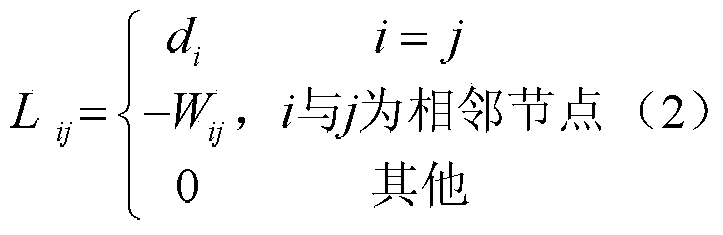
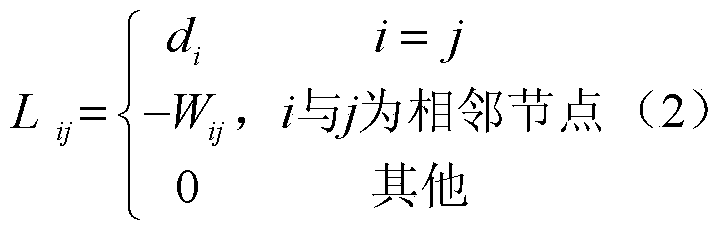
Determined by the formula L weighting chart the Laplace matrix:
![]()
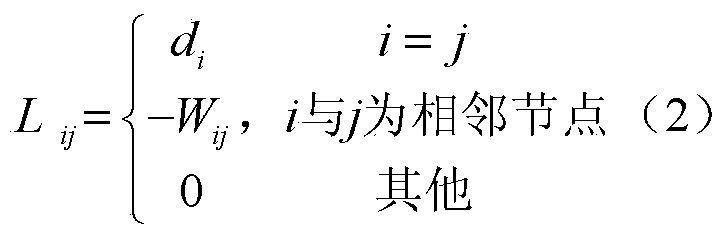
wherein L ij to Laplace matrix to the corresponding vertex in L the elements of j i, d i i as vertex and weight of the surrounding points, d i =∑W ij;
Step three, the use of the step and background spot in seed spot and weighting map in step two, through random wandering Image segmentation algorithm in the binocular images from salience object segmentation;
Step trinity, the binocular Image the pixel points according to step one mark background spotseed spot and a set of divided into two types, that is, the marking point set V M and untagged point set V U, Laplace matrix according to L V M and V U, priority marking point and then are arranged non-marking point; wherein the divided into L L M, L U, B, B T four parts, the Laplace matrix representation is as follows:
wherein L M to the marker points to the marking point the Laplace matrix, L U is a non-marking point to the non-marking point the Laplace matrix, and B B T respectively to the non-marking point of the mark point and the non-marking point to the marking point the Laplace matrix;
Step 32 , according to Laplace matrix and the marking point solution combined dirichlet integral D[x];
Combined dirichlet integral formula is as follows:
The weighted graph wherein x peak to the marking point in the probability matrices, x i and x j i and j are respectively as vertex the probability of the marked points;
According to the mark point set V M and untagged point set V U, the divided into x x M and x U two parts, x M to the marker point set V M corresponding probability matrices, x U the marking point set is not V U corresponding probability matrix; the formula (4) is decomposed into:
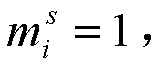
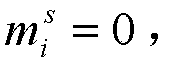
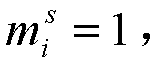
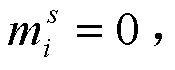
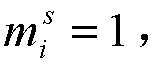
The marking point s, setting m s, if any vertex i to s, then ![]() Otherwise
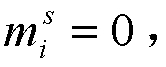
Otherwise ![]() The D[x u] against x U to differential, formula (5) the minimum value s is dirichlet probability value of the marking points:
The D[x u] against x U to differential, formula (5) the minimum value s is dirichlet probability value of the marking points:
Wherein ![]() The first time that the vertex i the probability of the marking point s;
The first time that the vertex i the probability of the marking point s;
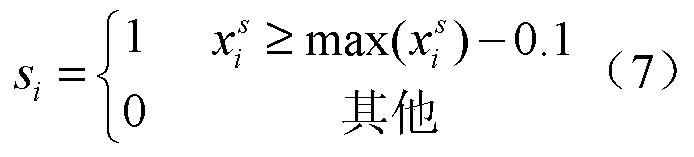
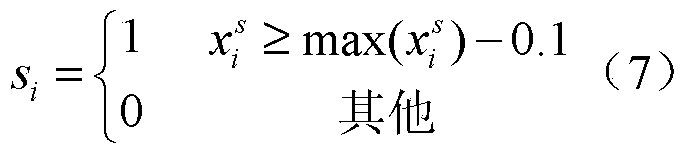
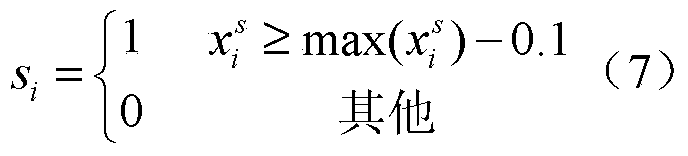
According to obtained by the combination of the integral Dirichlet ![]() The formula (7) divided threshold, generating a segmentation map:
The formula (7) divided threshold, generating a segmentation map:
![]()
wherein s i i for a vertex of the corresponding position in the segmentation map of the pixel size;
Wherein the brightness in the segmentation map 1 for the pixel point in the Image that the significance target, luminance is 0 as the background, that is;
Step three, with the segmentation map is multiplied by the original Image to the corresponding pixel, generating target array , the significance of the extracted target, formula is as follows:
t i = s i · I i (8)
wherein t i as the goal pattern of a T the gray values of the vertex i, I i the position corresponding to the input Image I (σ) of the gradation value of i;
Step four, the algorithm will SIFT significance target separately matching key points;
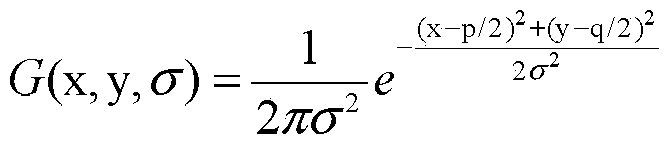
Step 41 , the target Figure to establish the Gaussian pyramid, the Image after filtering by a difference of two Image DOG, D DOG Image defined as (x, y, σ), a formula as follows:
D (x, y, σ) = (G (x, y, kσ)-G (x, y, σ)) *T (x, y)
(9)
=C (x, y, kσ)-C (x, y, σ)
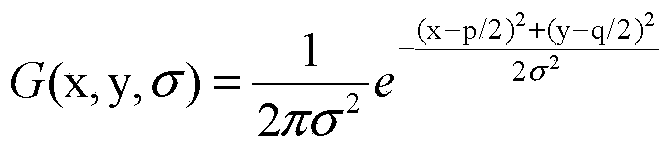
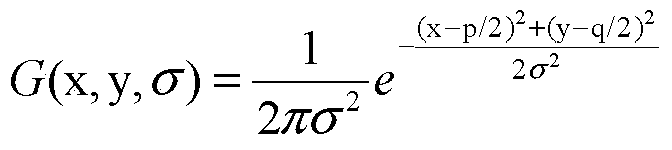
Wherein ![]() As a yardstick Gaussian function of the changes in, p, Gaussian template q dimension of said, (x, y) to pixel point in the Image at the position of the Gaussian pyramid, σ is an Image of the scale space factor, expressed k a specific scale value, C (x, y, σ) defined as G (x, y, σ) with target array (x, y) T of the convolution, in other words C (x, y, σ) =G (x, y, σ) *T (x, y);
As a yardstick Gaussian function of the changes in, p, Gaussian template q dimension of said, (x, y) to pixel point in the Image at the position of the Gaussian pyramid, σ is an Image of the scale space factor, expressed k a specific scale value, C (x, y, σ) defined as G (x, y, σ) with target array (x, y) T of the convolution, in other words C (x, y, σ) =G (x, y, σ) *T (x, y);
Step 42 , DOG in the adjacent of the extreme point is determined in the Image, by fitting three-dimensional secondary function to determine the position and the dimension of the extreme point as a key point, and according to the key matrix Hessian stability detection in order to eliminate edge response, as follows:
The scale space (a) by performing a Taylor expansion DOG the curve fitting D to (X):
wherein X= (x, y, σ) T, D the curve fitting, the formula (10) to make the leads and 0, the offset of the extremum point of formula (11):
In order to remove the low contrast of the extreme point, the formula (11) into the formula (10), formula (12):
if type (12) the value is bigger than of 0.03, to retain the extreme point and obtain the precise position of the extreme point and scale, otherwise discarding;
(B) through the key point Hessian matrix screening the elimination of the key point is not stable;
Hessian matrix by calculating the ratio between the curvature of the characteristic value;
Neighborhood of key points is judged according to the curvature of the edge point;
The ratio of the of curvature is set to 10, greater than 10 is deleted, on the contrary, be reserved, the reservation of the key point is stable;
Step 43 , using the key point neighborhood 16 × 16 pixels of the window for each key point specified direction parameter;
DOG detected for the key points of the Image, the size and the direction of the gradient of the calculation formula is as follows:
(13)
θ (x, y) =tan -1 ((C (x, y+ 1)-C (x, y-1)) / (C (x+ 1, y)-C (x-1, y)))
Wherein C is the key point of the scale space, a gradient of the m size of the key points, for θ of the gradient direction; to the critical point as the center, in the surrounding area of a 16 × 16 field, the gradient of pixel points is determined size and the gradient direction, the use of histogram statistics of gradient of the neighborhood points; the direction of the abscissa of the histogram, the 360 degrees is divided into 36 portions, each is 10 degrees a of the corresponding histogram, the histogram of the ordinate is the gradient magnitude, corresponding to a corresponding gradient direction is added to the size of the point, and as the size of the ordinate of the; main direction definition is the gradient magnitude of the direction of the section of the most greatly hm, through the gradient in size above 08 *hm as the section of the auxiliary to the main direction, in order to enhance the stability of the matching;
Bottle steps, key points described sub-statements establishment of the local feature information
The coordinates of the first key point around the direction of rotation as the key point;
Then selecting around key points 16 × 16 window, in the neighborhood is divided into 16 a 4 × 4 small window, in the 4 × 4 in the small window, calculating its corresponding magnitude and direction of the gradient, and using a 8 bin a histogram of a statistical each of the small window of gradient information, by Gaussian weighted algorithm around the key point 16 × 16 window described sub-formula is calculated:
For wherein h the descriptors, (a, b) as the key point in the Gaussian pyramid Image position, m g as the key point of the gradient histogram 43 the size of the main direction of the step gradient size, d is the length of the window 16, (x, y) to pixel point in the Image at the position of the Gaussian pyramid, (x ', y') the coordinate of the pixel in the direction of rotation as the key point in the neighborhood of the new coordinate, the new coordinate calculation formula such as formula:
θ g the gradient direction as the key point;
The 16 × 16 obtained by calculation of the window 128 of the feature vector of each key point, as the H= (h 1, h 2, h 3, ..., h 128), normalization processing the characteristic vector, the feature vector is normalized after L g, normalized formula such as formula:
wherein L g = (l 1, l 2, ..., l i, ..., l 128) is normalized after the feature vector of the key point, l i, i=1, 2, 3, ... For a normalized vector;
Using the key point of the Euclidean distance of the feature vector as a binocular Image in determining measurement of the degree of similarity of the key points, binocular Image of the matching key points, the key matching pixel point coordinate information as a set of key information;
Step four or five, the matching key points to be generated;
Find the coordinates of each pair of key points of the horizontal parallax, turn into the parallax error matrix, parallax matrix defined as K n = {k 1, k 2...k n}, n the logarithm of the for a match, k 1, k 2, k n parallax error for a single matching point;
Find the median of the matrix of parallax error k m, reference parallax error matrix and, as the K n ', formula is as follows:
K n ' = {k 1-k m, k 2-k m, ..., k n-k m} (17)
Parallax error threshold is set to 3, the K n 'greater than a threshold value in the corresponding parallax delete, obtaining the final inspection matrix results K' , k 1 ', k 2', k n ' is the correct matching point after screening the parallax error, n' for the final correct matching of the logarithmic, formula is as follows:
K '= {k 1', k 2 ', ..., k n'} (18)
Step five, the step four obtained parallax matrix K ' into the binocular ranging of a significance in the model of target distance;
Two identical the focal length of the imaging system are J along the horizontal direction, are two optical axis parallel to the horizontal plane, the Image plane is parallel to the vertical plane;
Assumptions M a target points in the scene (X, Y, Z), on the left, the right two imaging is separately Pl (x 1, y 1) and Pr (x 2, y 2), x 1, y 1 and x 2, y 2 Pl and Pr respectively in the imaging of the coordinates of the vertical plane, defined as the binocular parallax error in the model k= | pl-pr | = | x 2-x 1 |, the triangle similar relationship to obtain distance formula, X, Y, Z axis in the coordinate system in space, the vertical axis, the axis of ordinates of coordinates:
Wherein dx 'that every pixel in the Image forming film of a horizontal shaft in the direction of the physical distance between the, f is the focal length of the imaging system, the target point two image formations M z is the distance of the line of centers, the step four find leads the type the parallax error matrix (19) in, binocular according to the physical model corresponding to the information to find the distance matrix Z' = {z 1, z 2, ..., z n '}, z 1, z 2, z n' determined for a single matching parallax error significance of the target distance, the average value of the distance matrix finally gets the binocular Image in the target distance the significance Z f, formula is as follows:
The beneficial effect of the invention is:
1, the invention adopts the method of simulating human visual system, the region of interest for extracting the human eye, algorithm extracted basic objectives the significance results are consistent with the human eye detection, so that the extracted with the invention can realize the recognition of the human eye-significance target.
2, the present invention automatically complete the significance of target distance measurement, does not need to manually select the significance target.
3, a goal of the present invention to match the same, so as to guarantee that the key point matching of similar result of parallax error, can effectively screening the wrong matching point, matching accuracy close to 100%, the parallax of a relative error less than 2%, the accuracy of the increased distance.
4, less matching information of this invention, additional independent calculation can be effectively reduced, is reduced by at least 75% of the match computation, and to reduce the introduction of the irrelevant data, the matching data utilization rate of 90% or more, so that the environment can be realized under complex Image salience target distance measurement, improves Image processing efficiency.
5, the invention refers to the field of vision in the running of the vehicle in the front Image significance target distance measurement, so as to provide critical information for automobile safety, solving the problem that the conventional Image distance measurement only the depth of the whole picture can be detected, is avoided and very good error is relatively large, the problem of excessive noise.
6, the present invention notably through the extracting injecteds binocular Image significance and realize the target segmentation, is reduced so as to make the target range, the time for the matching is reduced, improving the efficiency, to match the significant objectives of parallax thus find key, thereby realizing the distance measurement, since the target in a vertical surface, can be very effectively screening the wrong matching key point, enhancing the accuracy, the method of the invention can rapidly identifying significant target and accurately measure significance the target distance.
Description of drawings
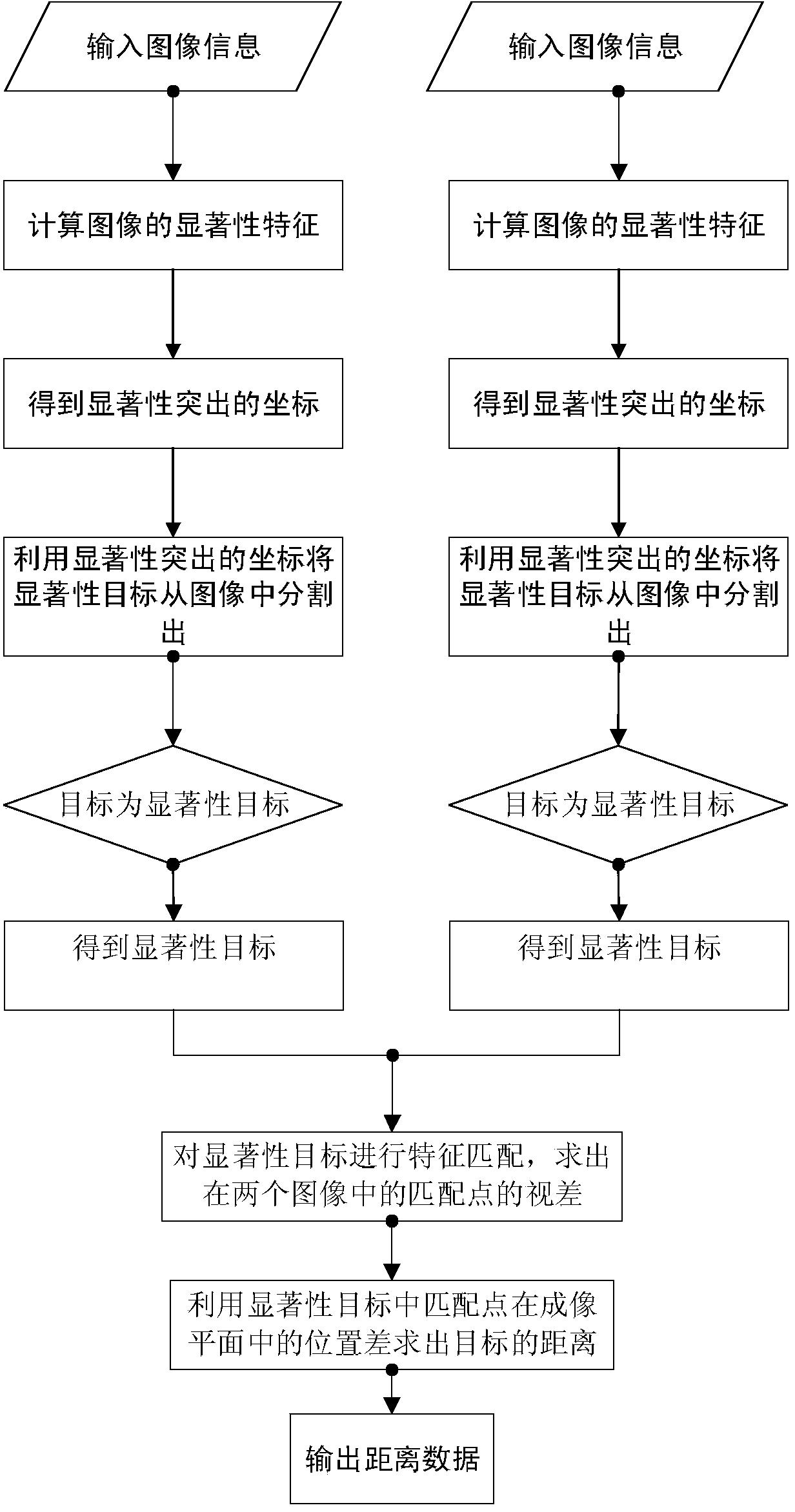
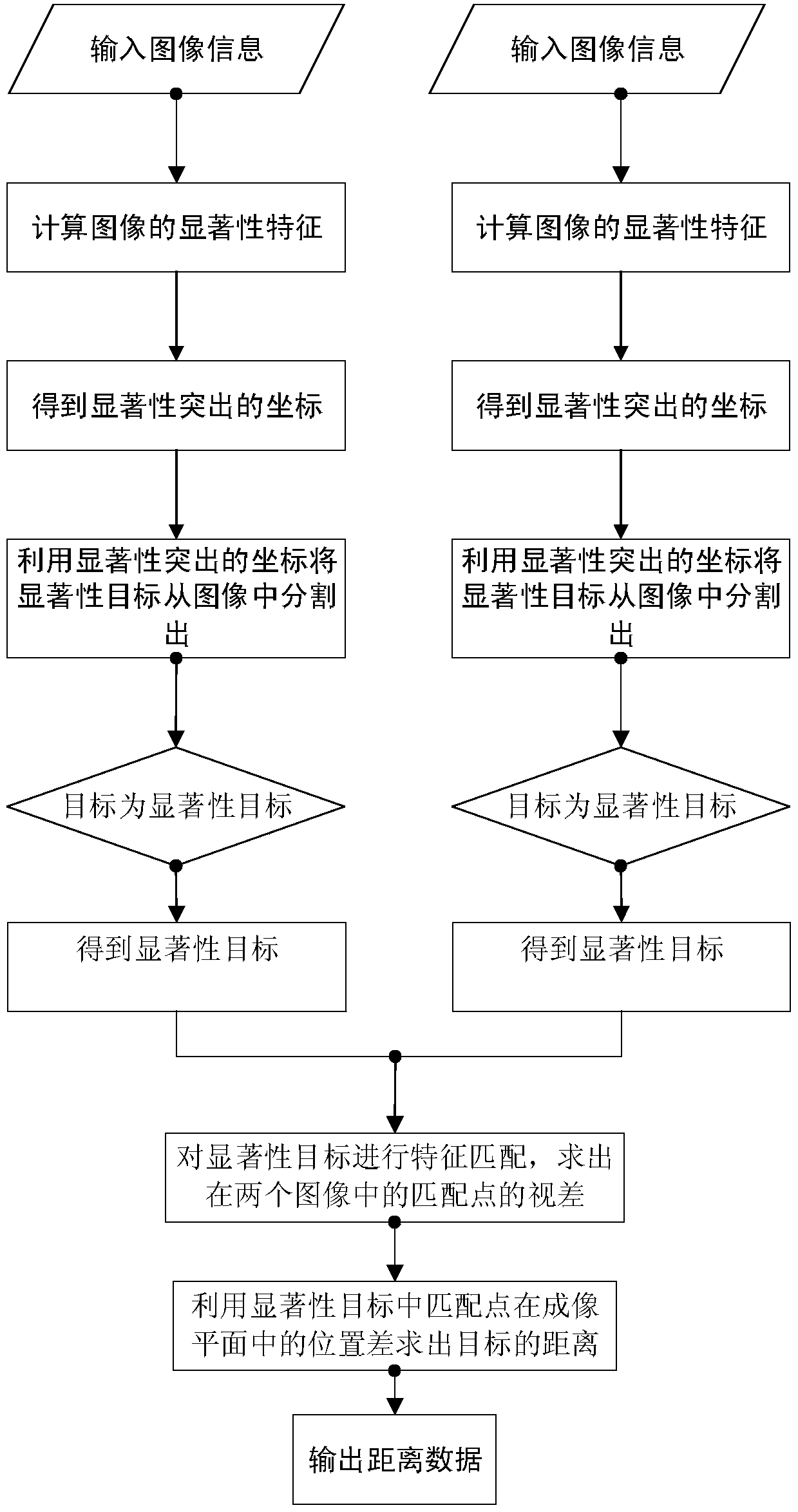
Figure 1 is flow chart of the method of the invention;
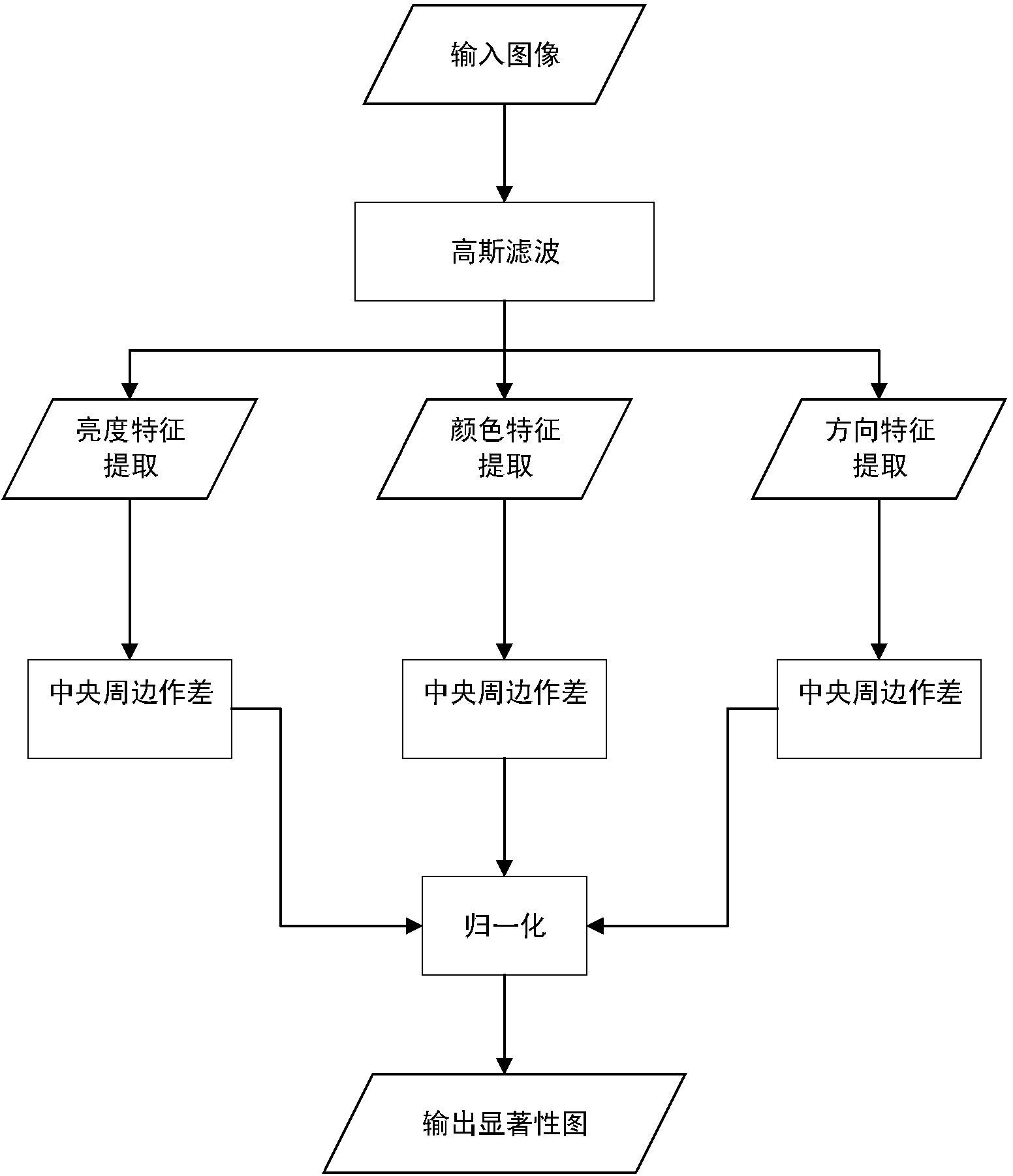
Figure 2 the visual significance analysis flowchart;
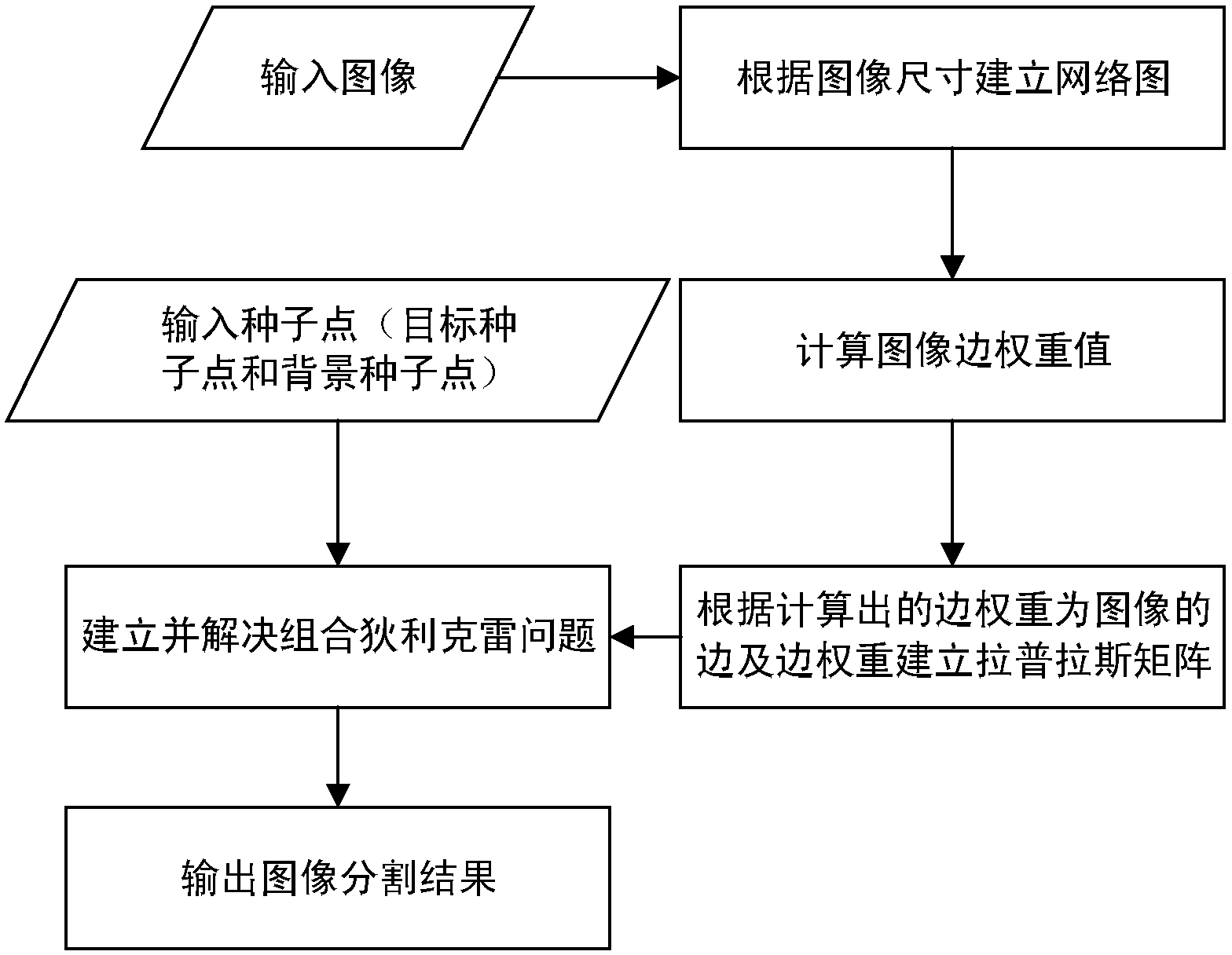
Figure 3 is a random migration algorithm flow chart;
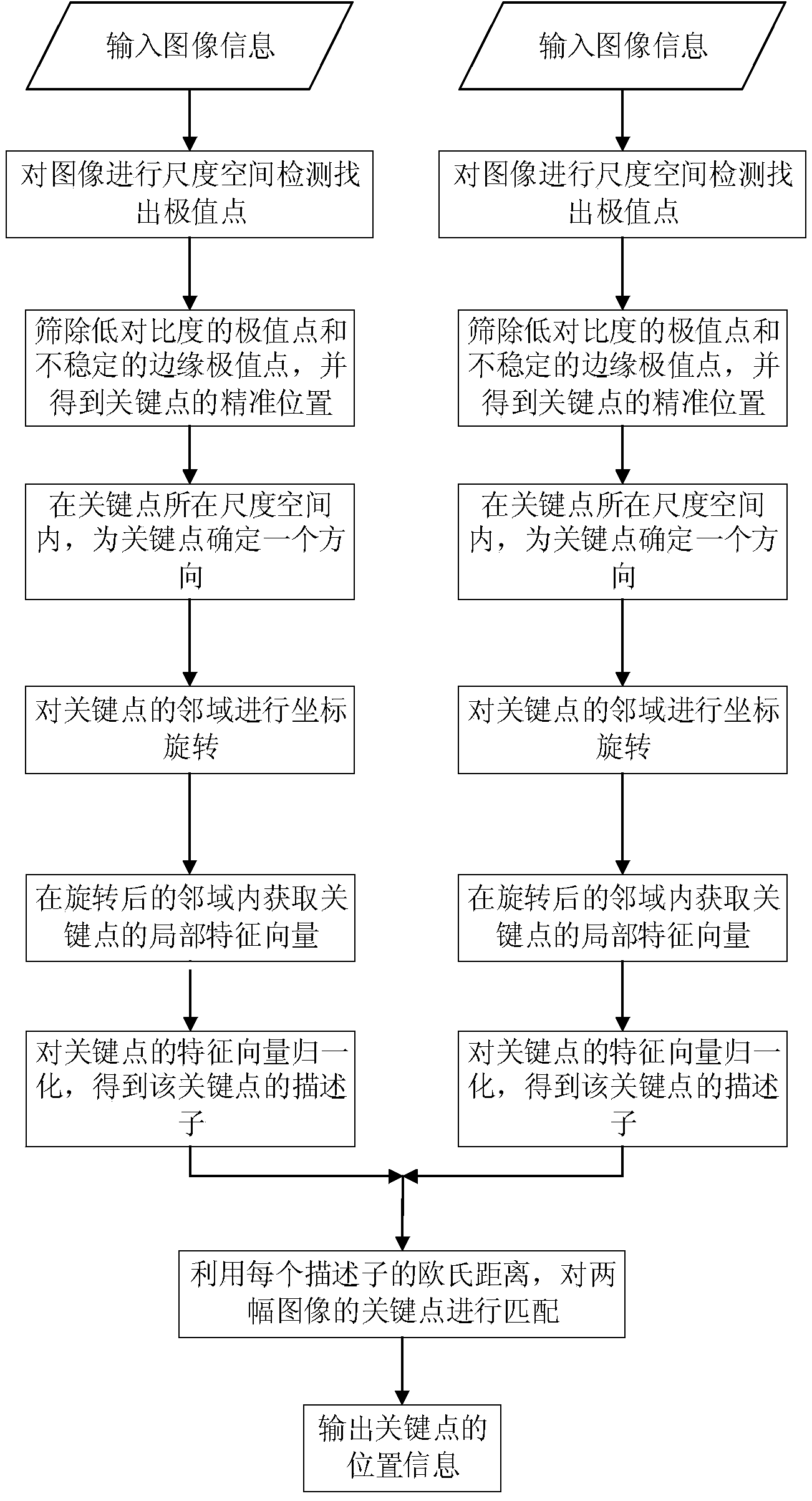
Figure 4 as SIFT algorithm flow chart;
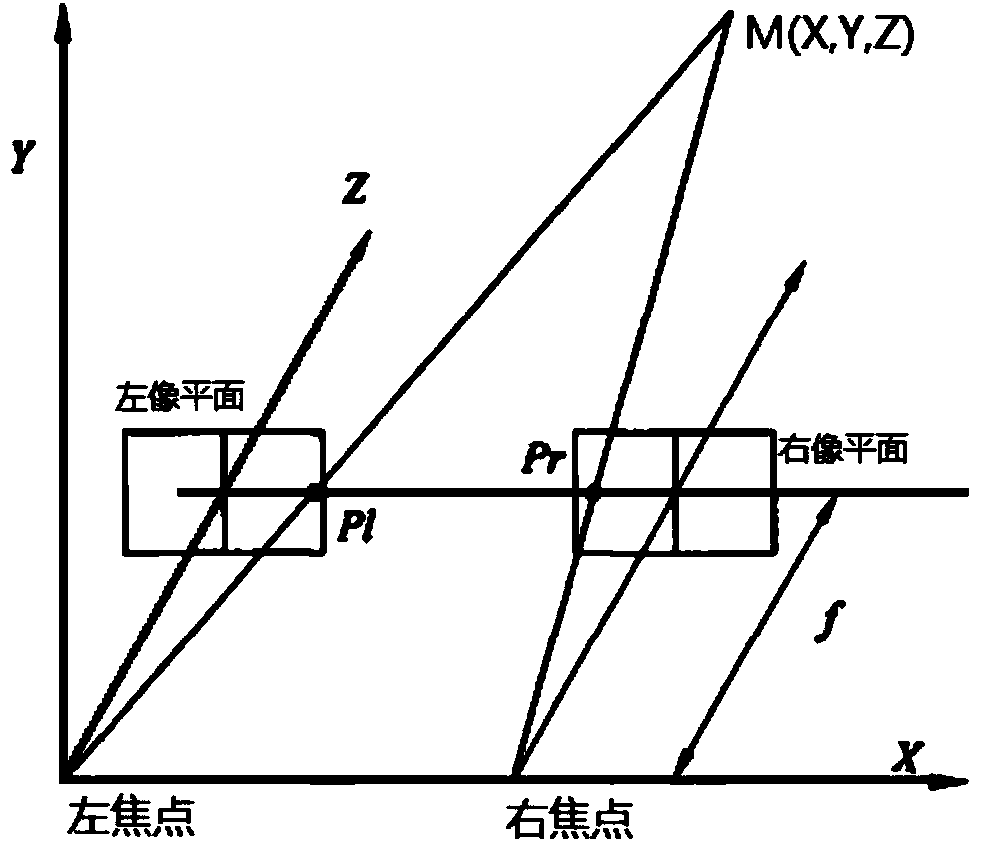
Figure 5 is a binocular measuring system, X, Y, Z coordinate system for defining the space, a certain point in space M, M Pl and Pr in the imaging surface of the imaging point, the point on the space M, f is the focal length of the imaging system.
Mode of execution
Further detailed description in conjuction with the concrete embodiment of the present invention.
One specific embodiment of: the following combination of Figure 1-Figure 5 illustrates that the embodiment, of the method of this embodiment comprises the following steps:
Step one, notably the natural model by vision binocular Image obviously feature extraction, and marked and seed spotbackground spot , specifically comprising:
Notably the natural model by vision binocular Image extracting the significance, are respectively calculated binocular Image of the brightness of each pixel point, color, three notable feature direction, and three significant weighting of normalized Image injecteds prominent picture. The representative of each pixel on the corresponding position in the Image salience large and small. To identify the largest pixel values in the picture point, that is, the significance of the strongest point, mark as seed point; gradually expanded around the seed point to identify range of significance the weakest point, mark as a background point. natural model extracted Image using vision remarkable significance process as shown in Figure 2.
Step one-to-one, first pre-processing, the binocular Image for edge detection, generating visual obviously natural model , edge information is Image important significance information;
Step two, notably the natural model by vision binocular Image extracting injecteds notably, generating significant feature chart;
Step three, according to a significant feature charts to find the maximum brightness in the picture pixel point, marked as seed points; and in order to seed point as the center of the 25 × 25 pixel traversed within a window, to identify the gray value of pixel points is less than 0.1 of the most distant from the seed point marked as background spot the pixel point;
Step two, the weighting map Image creation of the binocular;
Make use of classical gauss power function to binocular Image creation weighting map, different gray levels of the pixels of the binocular each pixel dot in the Image between with its surrounding pixels to a certain weight as the side, each pixel at the same time point as the vertex, comprising a weighting map of the vertices and edges;
The theory of using graph theory the entire Image as unoriented weighting map is, each pixel as the vertex in the weighting map, wherein the use of gray level of picture weighting map is the side of the weighted, in particular using classical gauss power function as follows:
wherein W ij said apex and vertex i weight between the j, g i the luminance of the said pixel i, g j represent a pixel brightness of the j, β is a free parameter, e a natural base;
Determined by the formula L weighting chart the Laplace matrix:
![]()
wherein L ij to Laplace matrix to the corresponding vertex in L the elements of j i, d i i as vertex and weight of the surrounding points, d i =∑W ij;
Step three, the use of the step and background spot in seed spot and weighting map in step two, through random wandering Image segmentation algorithm in the binocular images from salience object segmentation;
Step three, the use of the step and background spot in seed spot and weighting map in step two, through random wandering Image segmentation algorithm in the binocular images from salience object segmentation;
Step trinity, the binocular Image the pixel points according to step one mark background spotseed spot and a set of divided into two types, that is, the marking point set V M and untagged point set V U, Laplace matrix according to L V M and V U, priority marking point and then are arranged non-marking point; wherein the divided into L L M, L U, B, B T four parts, the Laplace matrix representation is as follows:
wherein L M to the marker points to the marking point the Laplace matrix, L U is a non-marking point to the non-marking point the Laplace matrix, and B B T respectively to the non-marking point of the mark point and the non-marking point to the marking point the Laplace matrix;
Step 32 , according to Laplace matrix and the marking point solution combined dirichlet integral D[x];
Combined dirichlet integral formula is as follows:
The weighted graph wherein x peak to the marking point in the probability matrices, x i and x j i and j are respectively as vertex the probability of the marked points;
According to the mark point set V M and untagged point set V U, the divided into x x M and x U two parts, x M to the marker point set V M corresponding probability matrices, x U the marking point set is not V U corresponding probability matrix; the formula (4) is decomposed into:
Setting m s defined as the marking point s, if any vertex i to s, then ![]() Otherwise
Otherwise ![]() The D[x u] against x U to differential, formula (5) the minimum value s is dirichlet probability value of the marking points:
The D[x u] against x U to differential, formula (5) the minimum value s is dirichlet probability value of the marking points:
Wherein ![]() The first time that the vertex i the probability of the marking point s;
The first time that the vertex i the probability of the marking point s;
According to obtained by the combination of the integral Dirichlet ![]() The formula (7) divided threshold, generating a segmentation map:
The formula (7) divided threshold, generating a segmentation map:
![]()
wherein s i i for a vertex of the corresponding position in the segmentation map of the pixel size;
Wherein the brightness in the segmentation map 1 for the pixel point in the Image that the significance target, luminance is 0 as the background, that is;
Step three, with the segmentation map is multiplied by the original Image to the corresponding pixel, generating target array , the significance of the extracted target, formula is as follows:
t i = s i · I i (8)
wherein t i as the goal pattern the corresponding position of the T of the gradation value of i, I i the position corresponding to the input Image I (σ) of the gradation value of i;
Step four, the algorithm will SIFT significance target separately matching key points;
Through the segmentation algorithm SIFT target the significance of the separate key point detecting and matching, the matching coordinate of the screening, the result of the incorrect matching raised, leaving the correct matching result.
Binocular Image SIFT algorithm to match procedure as shown in Figure 4.
Step 41 , the target Figure to establish the Gaussian pyramid, the Image after filtering by a difference of two Image DOG, D DOG Image defined as (x, y, σ), a formula as follows:
D (x, y, σ) = (G (x, y, kσ)-G (x, y, σ)) *T (x, y)
(9)
=C (x, y, kσ)-C (x, y, σ)
Wherein ![]() As a yardstick Gaussian function of the changes in, p, Gaussian template q dimension of said, (x, y) to pixel point in the Image at the position of the Gaussian pyramid, σ is an Image of the scale space factor, expressed k a specific scale value, C (x, y, σ) defined as G (x, y, σ) with target array (x, y) T of the convolution, in other words C (x, y, σ) =G (x, y, σ) *T (x, y);
As a yardstick Gaussian function of the changes in, p, Gaussian template q dimension of said, (x, y) to pixel point in the Image at the position of the Gaussian pyramid, σ is an Image of the scale space factor, expressed k a specific scale value, C (x, y, σ) defined as G (x, y, σ) with target array (x, y) T of the convolution, in other words C (x, y, σ) =G (x, y, σ) *T (x, y);
Step 42 , DOG in the adjacent of the extreme point is determined in the Image, by fitting three-dimensional secondary function to determine the position and the dimension of the extreme point as a key point, and according to the key matrix Hessian stability detection in order to eliminate edge response, as follows:
The key points of the Image of a local extremum points DOG, traversals DOG each point on the Image, the same for each point of the scale 8 and neighboring points adjacent the upper and lower of the two 2 × 9 points a total of 26 the size of the gray values of the points, if it is greater than the surrounding neighboring points or small the extremum point.
The extreme point is not the real key point, in order to improve the stability, the required scale space (a) by performing a Taylor expansion DOG the curve fitting D to (X):
wherein X= (x, y, σ) T, D the curve fitting, the formula (10) to make the leads and 0, the offset of the extremum point of formula (11):
In order to remove the low contrast of the extreme point, the formula (11) into the formula (10), formula (12):
if type (12) the value is bigger than of 0.03, to retain the extreme point and obtain the precise position of the extreme point and scale, otherwise discarding;
(B) through the key point Hessian matrix screening the elimination of the key point is not stable;
Hessian matrix by calculating the ratio between the curvature of the characteristic value;
Neighborhood of key points is judged according to the curvature of the edge point;
The ratio of the of curvature is set to 10, greater than 10 is deleted, on the contrary, be reserved, the reservation of the key point is stable;
if type (12) the value is bigger than of 0.03, to retain the extreme point and obtain the precise position of the extreme point (the original position after the offset of the fitting) and dimension, otherwise discarding. In order to eliminate key point of instability, through the key point Hessian matrix of screening:
Step 43 , determining key point position after and their size, the need to compose a direction key points, defined key point of the descriptors is relative to this direction. Use of the key point neighborhood 16 × 16 pixels of the window for each key point specified direction parameter;
DOG detected for the key points of the Image, the size and the direction of the gradient of the calculation formula is as follows:
(13)
θ (x, y) =tan -1 ((C (x, y+ 1)-C (x, y-1)) / (C (x+ 1, y)-C (x-1, y)))
Wherein C is the key point of the scale space, a gradient of the m size of the key points, θ of the gradient direction as the key point; to the critical point as the center, the surrounding region delimited a neighborhood, the use of histogram statistics of the gradient in the neighborhood;
The direction of the abscissa of the histogram, the 360 degrees is divided into 36 portions, each is 10 degrees a of the corresponding histogram. The ordinate of the histogram the magnitude of the gradient, the gradient direction corresponding to a corresponding add the size of the point, and as the size of the ordinate of the same. The gradient is defined as the main direction of the maximum size of the section direction hm, through the other the height above 08 *hm as the section of the auxiliary to the main direction, in order to enhance the stability of the match.
Step bottle, through the stage, each of the key detected will be the position, direction, this dimension the three kinds of information. For each key point established a descriptors in order to express the local feature information of key point.
The coordinates of the first key point around the direction of rotation as the key point. Then selecting around key points 16 × 16 window, in the neighborhood is divided into 16 a 4 × 4 of the small window. In the 4 × 4 in the small window, calculating its corresponding magnitude and direction of the gradient. And using a 8 bin a histogram of a statistical each of the small window of gradient information. By Gaussian weighted algorithm around the key point 16 × 16 window described sub-formula is calculated:
For wherein h the descriptors, (a, b) as the key point in the Gaussian pyramid Image position, d is the length of the window 16, (x, y) to pixel point in the Image at the position of the Gaussian pyramid, (x ', y') the coordinate of the pixel in the direction of rotation as the key point in the neighborhood of the new coordinate, the new coordinate calculation formula such as formula:
As the key point in the direction of θ.
The 16 × 16 obtained by calculation of the window 128 of the feature vector of each key point, as the H= (h 1, h 2, h 3, ..., h 128), in order to reduce the influence of light, the normalization process to the feature vector, the feature vector is normalized after L g, normalized formula such as formula:
wherein L g = (l 1, l 2, l 3, ..., l 128) is normalized after the feature vector of the key point;
When the binocular Image of the two pieces of the key points of the graph after the descriptors are generated, using the key point of the Euclidean distance of the feature vector as a binocular Image in determining measurement of the degree of similarity of the key points, binocular Image of the matching key points, the key matching pixel point coordinate information as a set of key information;
Step four or five, to avoid to the greatest extent the generation of the error, the matching key points to be generated;
As the measurement system is a binocular model, so the significance of the two key points to a horizontal plane in the Image, the level of each pair of key points is equal to the difference of the theory. Therefore, find the coordinates of each pair of key points of the horizontal parallax, turn into the parallax error matrix, parallax matrix defined as K n = {k 1, k 2...k n}, n the logarithm of the for a match, k 1, k 2, k n parallax error for a single matching point;
Find the median of the matrix of parallax error k m, reference parallax error matrix and, as the K n ', formula is as follows:
K n ' = {k 1-k m, k 2-k m, ..., k n-k m}
Parallax error threshold is set to 3, the K n 'greater than a threshold value in the corresponding parallax delete, get the final result of inspection matrix K' , in order to avoid incorrect matching the interference brought about by the key point. k 1 ', k 2', k n ' is the correct matching point after screening the parallax error, n' for the final correct matching of the logarithmic, formula is as follows:
K '= {k 1', k 2 ', ..., k n'}
Step five, the step four obtained parallax matrix K ' into the binocular ranging of a significance in the model of target distance;
The significance of the target matching the determined key points in the Image coordinate as the goal of the significance of the binocular parallax. The parallax error into the binocular ranging in model significance thus find target distance.
Binocular imaging can obtain two images of the same scene Image in different visual angles, binocular model as shown in Figure 5.
Two identical the focal length of the imaging system are B along the horizontal direction, are two optical axis parallel to the horizontal plane, the Image plane is parallel to the vertical plane;
M assumption that point in the scene (X, Y, Z), on the left, the right two imaging is separately Pl (x 1, y 1) and Pr (x 2, y 2), x 1, y 1 and x 2, y 2 Pl and Pr respectively in the imaging of the coordinates of the vertical plane, defined as the binocular parallax error in the model k= | pl-pr | = | x 2-x 1 |, the triangle similar relationship to obtain distance formula, X, Y, Z axis in the coordinate system in space, the vertical axis, the axis of ordinates of coordinates:
Wherein dx that every pixel in the Image forming film of a horizontal shaft in the direction of the physical distance between the, f is the focal length of the imaging system, the target point two image formations M z is the distance of the line of centers, the step four find leads the type the parallax error matrix (17) in, binocular according to the physical model corresponding to the information to find the distance matrix Z '= {z 1, z 2, ..., z n'}, z 1, z 2, z n' determined for a single matching parallax error significance of the target distance, the average value of the distance matrix finally gets the binocular Image in the target distance the significance Z f, formula is as follows:
Two specific embodiments: the following Figure illustrates this embodiment with, with this embodiment of the specific embodiment is a different: step 11 state the Image edge detection of the specific process is as follows:
Step 111 , adopts 2D Gaussian filter template to the binocular Image performing convolution operation to eliminate noise interference of the Image;
Step 112 , the horizontal and vertical direction of the first order partial differential respectively calculating binocular Image I after filtering (x, y) on the gradient of the pixel amplitude and gradient direction, wherein the direction of the direction and x y dx and dy partial derivatives are respectively:
Dx= [I (x+ 1, y)-I (x-1, y)]/ 2 (21)
Dy= [I (x, y+ 1)-I (x, y-1)]/ 2 (22)
The gradient amplitude is:
D ' = (dx 2 +dy 2) 1/2 (23)
Gradient direction is:
Θ ' =arctan (dy/dx) (24);
D 'and θ' are respectively said binocular Image I after filtering (x, y) on the gradient of the pixel amplitude and gradient direction;
Step 113 , the gradient for non-maximum value suppression, then double-threshold processing the Image, the edge Image is generated; wherein the edge of the edge Image is the gray level of 255, non-edge point gray level to 0.
Three specific embodiment of: the following Figure illustrates this embodiment with, with this embodiment the concrete mode of execution of the one or two different: step 12 state the vision significant natural model the use of binocular Image extracting injecteds notably, a significant feature of the graph is generated for the specific process:
Step 121 , after Image edge detection of the binocular, and the original Image overlapped edge Image:
I 1 (σ) =0.7I (σ) + 0.3C (σ) (25)
Wherein I (σ) as input binocular Image of the original Image, the edge Image C (σ), I 1 (σ) is superimposed after processing the Image;
Step 122 , using Gaussian difference function computing superimposing processing the Image after nine-layer of the Gaussian pyramid, wherein the section 0 of the superposed Image of the input layer, 1 to 8 layers which are respectively a previous layer using Gaussian filter and reduced a by sampling, of the input Image has a size corresponding to a 1/2 to 1/256, the Gaussian pyramid extracting each layer of brightness, color, and direction characteristic to the corresponding brightness pyramid, the pyramid color ahram and direction;
Extracting luminance characteristic formula is as follows:
I n = (r+g+b)/ 3 (26)
R therein, g, b are respectively corresponding to the input of the binocular Image color of the red, green, blue of the three component, I n for the luminance characteristic;
Extracting a color characterized by a formula as follows:
R=r-(g+b)/ 2 (27)
G=g-(r+b)/ 2 (28)
B=b-(r+g)/ 2 (29)
Y=r+g-2 (| +b | r-g) (30)
R, G, B, after the Y corresponding to the color of the Image component is superposed;
O (σ, ω) is the luminance characteristic I n direction of the Gabor function is filtering the extracted direction, the direction of the Gabor function ω is the Gaussian pyramid-layer, Gabor function σ is the number of the total direction, wherein σ ∈ [0, 1, 2..., 8], ω ∈ [0 °, 45 °, 90 °, 135°];
Step hifumi, the Gaussian pyramid to find the brightness of the different dimensions, three characteristic color and direction of the central peripheral comparatives makes the difference , in particular to:
The dimension c is (c∈ {2, 3, 4}) as the center scale, scale u (u=c +δ, δ ∈ {3, 4}) to peripheral dimension; the 9 layer in the Gaussian pyramid, the center of the scale and the outer circumference of the c scale between u 6 combined (2-5, 2-6, 3-6, 3-7, 4-7, 4-8);
C and scale through the scale of the difference of s characteristic chart representing the central and surrounding the to poor contrast to the local direction of the of the formula is:
I n (c, u) = | I n (c)-I n (u) | (31)
RG (c, u) = |ao (R (c)-G (c))-(G (u)-R (u)) | (32)
BY (c, u) = |ao (B (c)-Y (c))-(Y (u)-B (u)) | (33)
O (c, u, ω) = |ao O (c, ω)-O (u, ω) | (34)
Wherein before the difference between the two pieces through the interpolation of the identical size and then makes the difference ;
Step 124 , by the normalization to a difference of a characteristic chart of the different characteristics of the fusion, to generate input binocular Image the remarkable characteristic diagram, in particular to:
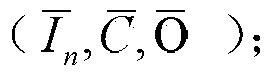
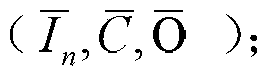
Firstly, the dimensions of each feature of the normalization fusion generation characteristic chart the comprehensive characteristic picture ![]()
![]() characteristic chart the normalized brightness characteristics,
characteristic chart the normalized brightness characteristics, ![]() Normalized characteristic chart for the color characteristic,
Normalized characteristic chart for the color characteristic, ![]() characteristic chart the normalized direction characteristic; computing processes such as shown in the following formula:
characteristic chart the normalized direction characteristic; computing processes such as shown in the following formula:
![]()
Wherein N (·) represents the normalized calculation function, first of all to the need to calculate the characteristic chart , in the characteristic of proper value of each pixel is normalized to a close area, [0,255] inner, then the normalized individual characteristics of the found in the largest of the whole map A remarkable value , and then find is the average value of the local maximum in the picture a, finally, the characteristic corresponding to each pixel is multiplied by the characteristic value 2(A-a);
The integrated for each feature is normalized chart of processing to obtain final S the remarkable feature map, the computational process are as follows:
Distance measuring method of significant target in binocular image




















 400-4929-0909
 contact@catarc.com.cn